Blog

  • How Email Verification & CRM Integration Can Boost Business Efficiency

    How Email Verification & CRM Integration Can Boost Business Efficiency

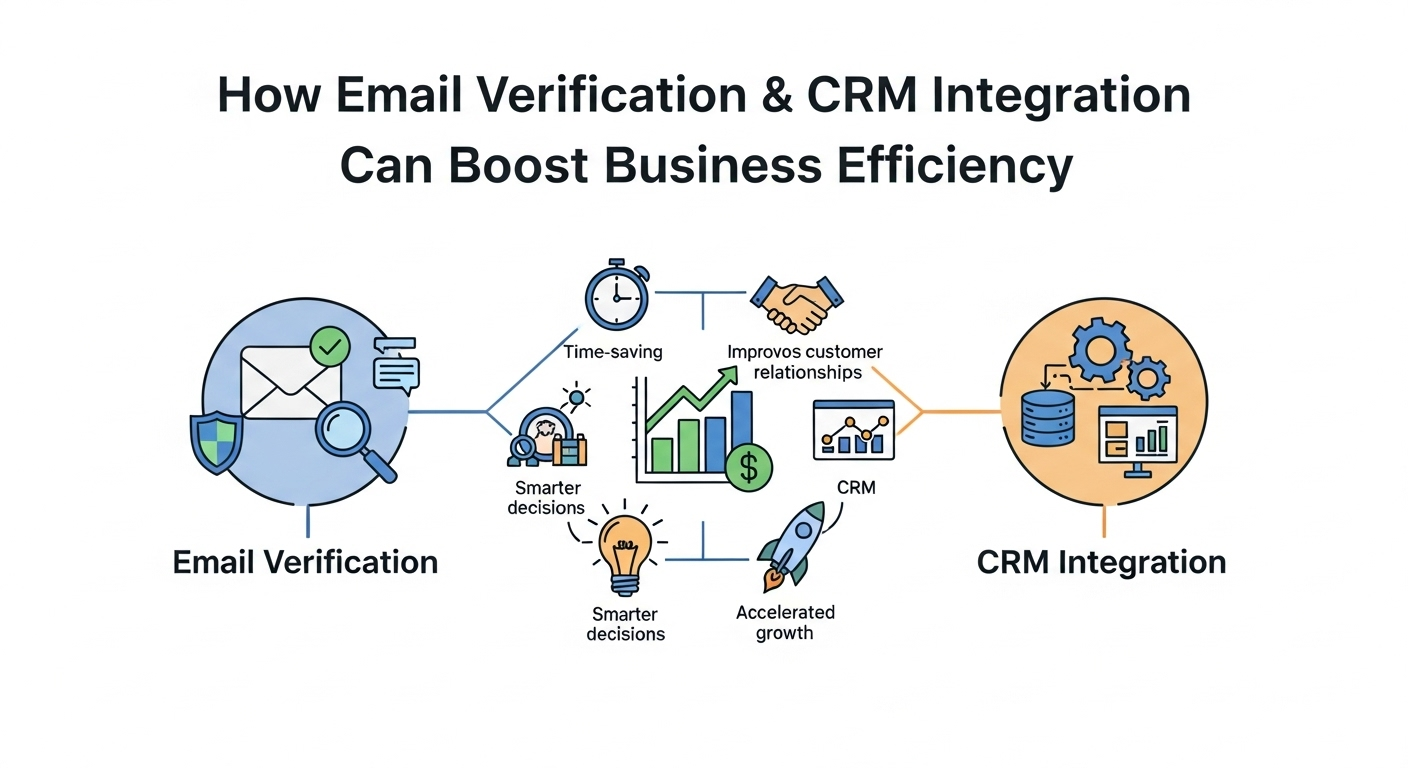
    For any business, especially small startups, maximizing efficiency is key to maintaining a competitive edge. One of the most effective ways to achieve this is through email verification and CRM (Customer Relationship Management) integration. By ensuring that your email lists are clean and up-to-date, you can dramatically improve the effectiveness of your email marketing campaigns. With CRM integration, businesses can streamline their workflow, enhance lead generation, and improve communication with customers, ultimately leading to more conversions.

    Email verification, when combined with a CRM system, offers businesses an unparalleled advantage in preventing email deliverability issues, reducing bounce rates, and enhancing overall customer relationship management. This powerful combination helps maintain high-quality data, automates key processes, and ensures that your emails reach their intended audience. For small business owners looking to optimize marketing efforts and reduce manual tasks, this synergy not only saves time but also fosters stronger connections with clients. Discover how integrating email verification and CRM can drive your business forward.

    Article Outline

    1. Why Email Verification is Crucial for Business Efficiency

    In this section, we will explore how email verification plays a pivotal role in boosting business efficiency, especially for startups. Businesses often face high bounce rates, poor engagement, and spam complaints, which can harm their sender reputation and negatively impact deliverability. A robust email verification system ensures that businesses only send emails to valid, active addresses, improving the chances of successful deliveries. This reduction in bounce rates helps businesses save valuable time, money, and resources that would otherwise be spent dealing with undeliverable emails.

    Furthermore, clean email lists lead to better engagement rates, as emails reach the right people. We’ll include a background story of a startup that faced email delivery issues and how implementing email verification significantly boosted their marketing results. With this strategy, businesses can optimize their email marketing campaigns, making their efforts more efficient and cost-effective. We will also recommend best practices for startups, emphasizing the importance of regular list cleaning and timely verification to keep marketing efforts running smoothly.

    2. The Role of CRM Integration in Enhancing Business Operations

    CRM integration is an essential tool for managing customer relationships and data within a business. In this section, we’ll explain how integrating email verification with a CRM system can automate and enhance key business processes. CRMs house customer data, including email addresses, purchase history, and preferences. When businesses use email verification alongside CRM systems, they can ensure the accuracy and cleanliness of the data entered into the system. This leads to more reliable communication, better segmentation, and personalized marketing campaigns that increase engagement.

    We’ll discuss the advantages of CRM integration, such as improved sales tracking, better customer insights, and more efficient lead management. Additionally, businesses will benefit from seamless integration of email marketing campaigns with CRM workflows, ensuring that emails are sent to the right contacts at the right time. By optimizing the CRM with email verification, businesses can create an efficient, automated process that maximizes productivity and strengthens customer relationships.

    3. How Combining Email Verification & CRM Integration Improves Email Marketing Campaigns

    In this section, we will dive deeper into how the integration of email verification and CRM can directly improve the success of email marketing campaigns. CRM systems help businesses manage and track customer interactions, while email verification ensures that the right contacts are targeted. By combining these two powerful tools, businesses can send personalized, relevant emails to a clean, segmented list, increasing the likelihood of conversions.

    We’ll explain how CRM integration helps segment email lists based on customer behavior, preferences, and engagement levels, allowing businesses to tailor their messaging accordingly. Furthermore, email verification ensures that invalid or outdated contacts are excluded from the campaign, leading to higher open rates and fewer complaints. This section will also highlight how email marketing automation tools, when paired with CRM and email verification, allow businesses to optimize timing and reach customers at the most opportune moments. This ultimately boosts business efficiency by driving better results with less effort.

    4. Maximizing Business Productivity through Automation and Data Accuracy

    Email verification and CRM integration not only help with marketing but also contribute to overall business productivity by automating essential tasks. This section will focus on how automating the email verification process and integrating it with CRM systems can free up time for your team to focus on other high-value tasks. Businesses often waste resources manually managing email lists and ensuring data accuracy. With automated email verification and CRM synchronization, these tasks are streamlined, improving workflow efficiency.

    We’ll provide examples of how businesses, especially startups, benefit from automation. This can include automatic segmentation of email lists based on customer behavior or automated email verifications to ensure data integrity. With this system in place, businesses can ensure that the right data is always available to drive decisions and optimize marketing strategies. Additionally, automated processes help maintain the quality of customer interactions, making each one more relevant and effective.

    5. Key Benefits for Startups: Cost-Effective Marketing with Enhanced Customer Experience

    For startups, managing costs while ensuring growth is a constant challenge. Integrating email verification with a CRM system provides a cost-effective solution that not only improves marketing performance but also enhances the overall customer experience. Startups can reduce unnecessary marketing expenses by focusing efforts on a clean and verified list, ensuring that every email sent has a higher chance of reaching its intended audience.

    This section will focus on the tangible benefits that startups can expect when they integrate email verification and CRM systems, such as increased lead conversion, improved customer retention, and more efficient marketing spend. We will also provide recommendations for small businesses and startups on how to choose the right email verification tools and CRM solutions that best fit their budget and growth goals. With the right tools, startups can scale their operations efficiently and with confidence.

    Conclusion and Recommendations for Startups

    In conclusion, the integration of email verification and CRM systems is a game-changer for startups and small businesses. By ensuring accurate data, automating processes, and targeting the right audience, businesses can significantly improve their email marketing performance, save valuable time, and build stronger relationships with customers. Startups should make email verification and CRM integration a priority in their marketing strategy to maximize efficiency and drive growth.

    We recommend that small business owners invest in reliable email verification services that seamlessly integrate with their CRM systems. By doing so, startups can improve customer engagement, optimize marketing campaigns, and ultimately boost business efficiency. Moreover, with tools designed to scale with your business, you can save resources, improve data accuracy, and create a solid foundation for long-term success. If you’re a startup looking to grow, this integrated approach will help you achieve your goals with minimal effort and maximum impact.
  • The Evolution of Email List Management: Then & Now

    The Evolution of Email List Management: Then & Now

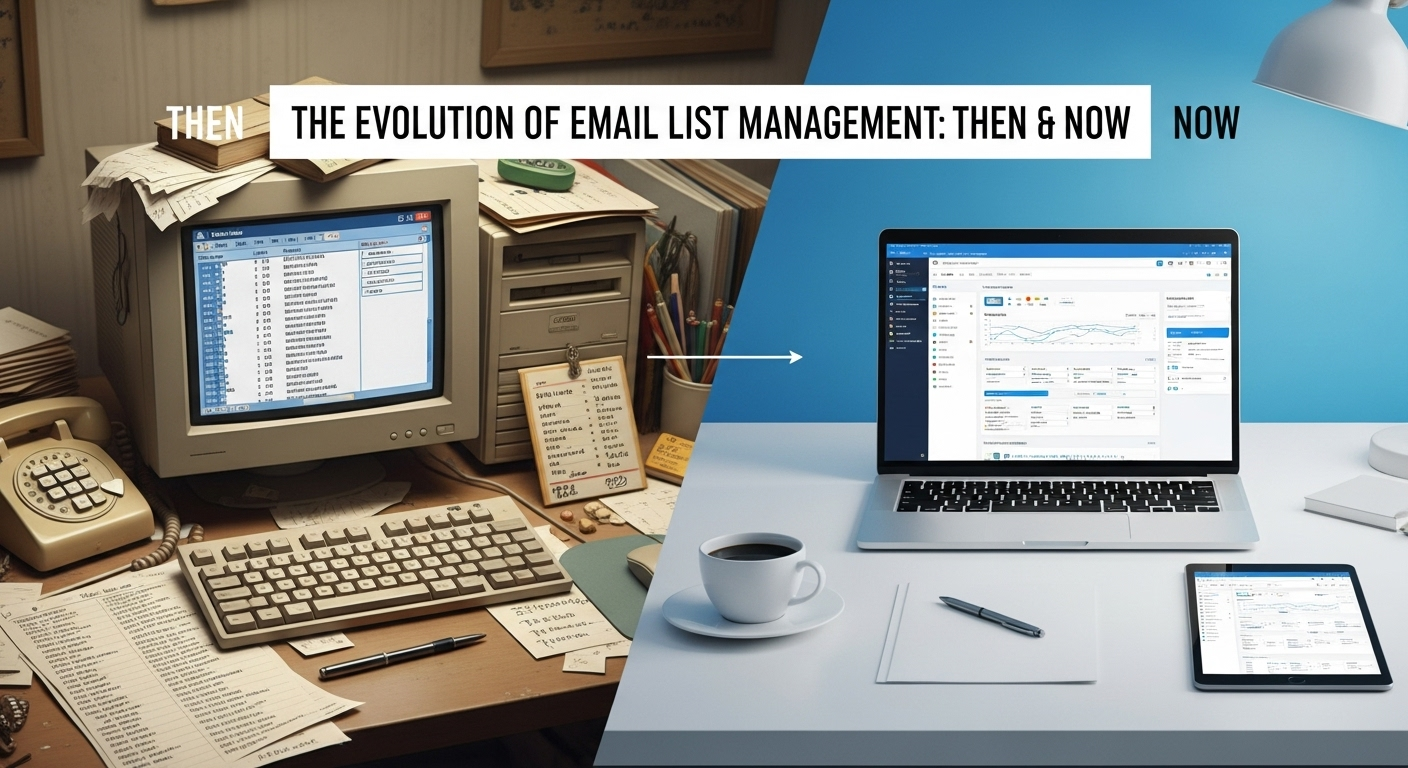
    Email marketing has always been a powerful tool for businesses to connect with their audience. However, as the digital landscape has evolved, so have the challenges that come with managing an effective email marketing strategy. In the past, marketers could simply send mass emails without worrying much about deliverability or spam filters. Fast forward to today, and the rules have changed. With stricter regulations, increased competition, and more sophisticated spam filters, ensuring your email reaches its intended recipient requires a more strategic approach—especially when it comes to email list management.

    Email verification is now a critical component of this strategy. As businesses increasingly rely on email for outreach and customer engagement, keeping your email list clean and up-to-date has never been more important. Verifying your email list helps prevent issues like high bounce rates, spam complaints, and blacklisting. For small businesses and startups, especially, making sure your emails reach real, engaged prospects is a game-changer. This article explores how email verification not only prevents spam complaints and blacklisting but also ensures that your email marketing campaigns remain effective, secure, and profitable.

    1. The Evolution of Email List Management: Then vs. Now

    In the early days of email marketing, managing an email list was a simple task. Marketers would collect as many email addresses as possible and send bulk messages to large groups of people, with minimal concern for deliverability or list quality. However, as email marketing grew in popularity, so did the need for more strategic approaches. Today, email list management involves ongoing efforts to keep the list clean and targeted, ensuring that emails are delivered to the right people. With the rise of spam filters, privacy laws, and inbox clutter, marketers are forced to focus on better list segmentation, list hygiene, and compliance. Email verification services have emerged as a critical solution to address these challenges, ensuring that the right message reaches a valid recipient. This section will trace the evolution of email list management from its humble beginnings to the highly refined strategies of today.

    2. The Role of Email Verification in Preventing Spam Complaints

    Spam complaints are one of the most damaging outcomes of poorly executed email campaigns. When recipients mark your emails as spam, it not only harms your sender reputation but can also lead to blacklisting by email service providers (ESPs), significantly affecting your future campaigns. Email verification plays a pivotal role in preventing these complaints by ensuring that only valid and engaged email addresses are included in your campaigns. By verifying the accuracy and legitimacy of email addresses before sending, businesses can reduce the risk of triggering spam filters and avoid sending unwanted emails to uninterested or invalid recipients. This process helps protect your brand and improves the overall effectiveness of your email marketing efforts. In this section, we’ll dive deeper into the consequences of spam complaints, how email verification helps avoid them, and why this is crucial for small startups looking to grow their business.

    3. How Email Verification Prevents Blacklisting and Maintains Deliverability

    One of the most dangerous threats to email marketers is the risk of being blacklisted by ESPs. If your domain or IP address gets blacklisted, your emails will be blocked from reaching inboxes altogether, leaving your marketing efforts ineffective. High bounce rates, spam complaints, and sending emails to invalid addresses are primary reasons why a sender can be blacklisted. Email verification acts as a proactive measure to avoid these issues by identifying problematic email addresses before they cause harm. By regularly cleaning your email list and verifying the status of each email address, businesses can maintain a healthy sender reputation, improving email deliverability. In this section, we’ll discuss the blacklisting process, how it impacts your business, and how adopting email verification tools can prevent these devastating consequences, especially for startups who rely heavily on email marketing for growth.

    4. The Importance of Email Hygiene for Sender Reputation

    Sender reputation is one of the most critical factors in the success of your email marketing campaigns. A poor reputation can lead to emails being filtered into the spam folder, reducing engagement and hurting your brand’s credibility. One of the best ways to maintain a positive sender reputation is through regular email hygiene. Email hygiene refers to the practice of removing inactive, invalid, and unengaged email addresses from your list, and verifying the status of each email. By using email verification tools, businesses can ensure that their lists are always clean and up to date, which in turn helps maintain a good reputation with ESPs. This section will explore how email hygiene practices, when combined with email verification, can significantly improve deliverability rates and protect your brand’s image. Startups can benefit from these practices as they strive to establish themselves in a competitive market.

    5. Best Practices for Managing Email Lists and Optimizing Cold Outreach Campaigns

    Cold outreach campaigns can be highly effective for startups looking to expand their customer base, but they can also be tricky to execute successfully. The key to optimizing these campaigns is effective email list management. In this section, we’ll provide best practices for managing your email list before launching a cold outreach campaign, including how to segment your audience, clean your list, and verify email addresses. We’ll also highlight the importance of using email verification tools to reduce bounce rates and improve deliverability. These practices ensure that your cold outreach efforts are targeting the right people and reaching their inboxes without being flagged as spam. For startups, adopting these strategies can help increase response rates, improve brand awareness, and drive more conversions.

    Conclusion:

    Email verification is not just a best practice; it’s a critical component of a successful email marketing strategy, especially for small businesses and startups looking to scale quickly. By verifying your email list, you reduce the risk of spam complaints, blacklisting, and low deliverability rates, which can severely impact your reputation and revenue. For startups, every email sent counts, and ensuring that your email reaches valid and engaged recipients is crucial for your growth. Investing in a reliable email verification service can help you maintain a healthy list, improve your sender reputation, and optimize your cold outreach efforts.

    We recommend that startups and small business owners make email verification a priority in their email marketing campaigns. By implementing these strategies, you can protect your brand, increase your reach, and maximize your chances of success in the competitive digital landscape. Start today by choosing an email verification service and start experiencing the benefits of higher engagement, improved deliverability, and a stronger brand reputation.

  • Why Email Verification Will Become Even More Critical in the Age of AI

    Why Email Verification Will Become Even More Critical in the Age of AI

    In the ever-evolving digital world, email marketing continues to be one of the most effective ways to connect with customers. However, as technology advances, the challenges of maintaining clean, deliverable email lists become more complex. In the age of AI, where automation and data-driven decision-making are reshaping marketing strategies, email verification will play an even more crucial role. AI tools are advancing quickly, allowing businesses to analyze customer behavior and deliver personalized content, but they also expose marketers to the risk of bad email addresses and invalid leads. Bulk email verification ensures that businesses don’t waste resources on emails that won’t be received, safeguarding their reputation.

    As AI continues to take center stage in digital marketing, it is becoming increasingly clear that email verification is no longer a secondary task—it is a critical strategy. In an era where spam complaints and blacklisting are major obstacles to marketing success, ensuring that your emails reach valid, engaged customers is paramount. Email verification not only optimizes deliverability, but it also keeps businesses from falling into the traps of poor engagement metrics, blacklisting, and tarnished brand reputation. Let’s explore why this essential practice will only grow more critical as AI advances.

    1. Why Email Verification is Critical in the Age of AI

    Explanation: The age of AI has transformed the way businesses collect and utilize data. With AI-driven tools automating processes like lead scoring and segmentation, marketers can deliver more personalized content and target the right audience. However, this also means that ensuring email list quality is more important than ever. As businesses leverage AI to increase their marketing efficiency, the risk of sending emails to non-engaged, incorrect, or invalid email addresses also grows. Email verification serves as the first line of defense against this. It’s a safeguard that guarantees AI-optimized campaigns don’t waste time or resources on poor-quality leads. Moreover, AI tools can help improve the precision of verification processes, allowing for faster and more accurate cleanups of email lists, preventing issues like spam complaints and blacklisting. In a landscape where AI enhances productivity, email verification keeps campaigns on track, ensuring that messages reach the right inbox every time.

    2. The Impact of Email Verification on Deliverability

    Explanation: One of the main goals of email marketing is to ensure that emails are delivered to the intended recipients’ inboxes. Poor deliverability rates due to bad email addresses can significantly hurt engagement metrics. AI can optimize campaigns and create more personalized content, but if the email addresses on a list are inaccurate, even the most tailored marketing strategies will fall short. Email verification prevents this issue by removing inactive, misspelled, or invalid email addresses from the list, ensuring that only valid, engaged recipients are targeted. This not only prevents emails from being marked as spam but also improves the sender’s reputation with ISPs (Internet Service Providers). By maintaining a verified, healthy email list, marketers can ensure that their campaigns have a higher chance of landing in the inbox, which is essential for long-term success. In the AI-driven marketing landscape, email verification helps enhance deliverability, reducing bounce rates and improving open rates for better overall campaign performance.

    3. Spam Complaints and Blacklisting: How Email Verification Protects Against These Pitfalls

    Explanation: Spam complaints and blacklisting are two of the most significant risks for email marketers. When a company’s email campaigns are flagged as spam or their IP address is blacklisted, it can severely limit future marketing efforts. As AI tools become more sophisticated, the risks of spam complaints and blacklisting grow, as they make it easier to automate outreach to larger audiences. However, email verification helps marketers avoid these problems by filtering out invalid addresses that are more likely to generate complaints. Invalid or outdated addresses are often associated with complaints and blacklisting. By cleaning the email list through bulk verification, marketers can ensure their emails are sent only to valid and engaged users, which reduces the chances of their campaigns being marked as spam. This is especially critical in an AI-driven environment where larger, automated campaigns can easily go wrong if the email list is not properly managed.

    4. AI-Powered Email Verification: How Technology Improves List Hygiene

    Explanation: AI technologies have revolutionized many industries, and email marketing is no exception. AI-powered email verification systems can automatically detect invalid email addresses, flag risky ones, and clean the list in real-time. These AI-driven tools are faster, more accurate, and more efficient than traditional verification methods. They can also adapt and learn from past mistakes, becoming more intelligent over time. By integrating AI into email verification, marketers can automate list hygiene processes, improving accuracy and reducing human error. These systems can also integrate with other AI-powered marketing platforms, providing a seamless workflow and ensuring that only high-quality leads make it onto email lists. The result is improved deliverability, fewer spam complaints, and better overall campaign performance. AI-driven email verification allows marketers to focus on creating high-quality content while technology handles the tedious work of list cleaning.

    5. How AI is Shaping the Future of Email Marketing and Verification

    Explanation: Looking to the future, AI will continue to play a transformative role in email marketing. As AI becomes more integrated into marketing platforms, email verification will evolve alongside it. AI can not only help automate the verification process but also predict and prevent deliverability issues before they occur. For instance, AI tools can analyze past campaign data to predict which types of email addresses are likely to engage and which are more likely to result in bounces or spam complaints. This predictive capability will help marketers optimize their email lists before sending out campaigns, increasing ROI. Additionally, AI will further streamline list management by continuously updating and verifying email addresses in real-time, ensuring that email lists are always clean and up to date. As businesses continue to rely more on automated, AI-powered marketing tools, email verification will be an indispensable element in ensuring that campaigns remain effective and compliant with email standards.

    Conclusion and Recommendations

    As AI continues to shape the future of digital marketing, email verification will become even more critical. The combination of AI-driven personalization and automated tools offers businesses the opportunity to reach their target audience more effectively than ever. However, without clean, validated email lists, even the most advanced AI-powered campaigns can falter. Email verification will ensure that businesses maintain high deliverability rates, avoid spam complaints, and prevent blacklisting, all while improving engagement and boosting ROI.

    For startups and small business owners, the importance of email verification cannot be overstated. Implementing bulk email verification systems will save time, reduce costs, and protect your brand’s reputation. Investing in AI-powered verification tools will help streamline this process, ensuring you always reach valid, engaged customers. As AI continues to evolve, email verification will not just be a precautionary measure but a strategic component of successful, scalable email marketing campaigns. Don’t let invalid email addresses or spam complaints derail your marketing efforts—start investing in email verification today for a future-proof email marketing strategy..

  • How Generative AI Could Impact Email Verification Tools

    How Generative AI Could Impact Email Verification Tools

    The rapid advancement of Generative AI is reshaping industries, and email verification is no exception. As email marketing grows increasingly sophisticated, businesses face greater challenges in maintaining clean, engaged email lists. Spam complaints, blacklisting, and deliverability issues are common threats to email marketers, particularly for startups with limited resources. This is where AI-powered email verification comes into play. By leveraging artificial intelligence, email verification tools are becoming more accurate and efficient in identifying invalid or malicious email addresses before they enter the list.

    Imagine an AI system that can analyze vast amounts of data, predict patterns, and make real-time decisions to improve email deliverability—this is exactly what Generative AI can bring to email verification. Businesses can now rely on AI to filter out invalid emails, detect potential spam traps, and ensure their email campaigns reach engaged recipients. In this article, we will explore how Generative AI is revolutionizing email verification, offering solutions that not only prevent spam complaints but also safeguard businesses from the dangers of blacklisting. With the power of AI, businesses—especially startups—can now run more efficient, reliable email marketing campaigns, boosting both engagement and revenue.Article Outline

    1. The Importance of Email Verification in Today’s Digital Landscape

    The article begins by outlining the core reasons why email verification has become indispensable in modern digital marketing, especially for small businesses and startups. With the increasing reliance on email marketing for customer engagement, it’s crucial to ensure that the recipients are genuine, reducing the risk of high bounce rates, poor engagement, and blacklisting. The piece will delve into how invalid or fake email addresses are often the cause of high spam complaints and deliverability issues, leading to the need for a reliable verification system.

    We will explain the different stages of email validation, such as checking for syntax errors, domain validity, and identifying potential spam traps. For businesses without resources to manually validate emails, an automated tool is necessary. In this section, we’ll also introduce how Generative AI can automate and enhance the email verification process, providing startups and small businesses with smarter tools that deliver cleaner lists and more effective campaigns.

    2. How AI is Revolutionizing Email Verification Tools

    In this section, we will explain how Generative AI is changing the landscape of email verification. Traditional email verification methods were largely rule-based and reactive, but with AI, these tools can now proactively identify not just invalid addresses but also patterns that indicate high-risk or malicious emails. By using machine learning, AI-powered email verification tools can constantly evolve and improve their detection capabilities, staying ahead of spammers and malicious actors.

    We’ll highlight how Generative AI tools analyze user behavior and email data to predict and filter out fake or risky email addresses with much greater accuracy than before. By constantly learning from new data, these tools reduce the need for constant manual adjustments and ensure that email lists remain clean and optimized. Startups and businesses benefit from this level of automation, as they can scale their email marketing efforts without compromising deliverability or customer trust. The section will also explore how AI could help detect and manage spam complaints and blacklisting by providing advanced risk analysis, making it a valuable asset for any growing business.

    3. The Role of AI in Preventing Spam Complaints and Blacklisting

    Here, we’ll dive deeper into how AI-powered email verification helps businesses prevent spam complaints and blacklisting—two major hurdles in email marketing. With the rise of spammers and bots, businesses are at risk of sending emails to invalid addresses, which can result in complaints and blacklisting by email service providers. Generative AI plays a crucial role in analyzing email lists and identifying not only obvious invalid emails but also potential threats, such as spam traps and flagged email addresses.

    We will provide a background story of a startup that faced significant challenges with spam complaints and blacklisting due to poor list management. After incorporating AI-driven email verification tools, the company noticed a significant improvement in their email deliverability, with reduced bounce rates and fewer complaints. By using AI to validate emails in real-time, businesses can prevent the sending of unsolicited or suspicious emails, thereby maintaining their reputation and ensuring that their email campaigns reach the intended audience. The section will also offer tips on how businesses can integrate Generative AI into their email marketing workflows, ensuring that they are always using clean, verified lists.

    4. AI’s Impact on Email Marketing Automation and Business Growth

    This section will discuss how AI-driven email verification supports email marketing automation, enhancing the efficiency of campaigns. As businesses scale, manual list management becomes a daunting task, and that’s where AI truly shines. AI-powered tools can automate not only the verification process but also help optimize email marketing campaigns by segmenting audiences, identifying trends, and predicting which emails are likely to convert.

    By automating the email verification process, startups and small businesses save time and reduce human error, allowing them to focus more on creative and strategic aspects of marketing. AI enables businesses to scale their email marketing efforts while maintaining high standards of list hygiene. We will also include recommendations on how startups can leverage Generative AI to enhance their email strategies, offering practical insights on integrating email verification tools with marketing automation platforms. This ensures that emails are sent to real recipients, avoiding unnecessary risks like blacklisting and improving the overall customer experience.

    5. Future Trends: How AI Will Shape the Future of Email Verification

    Looking forward, we will explore the evolving role of Generative AI in email verification and its future potential. As AI continues to advance, it will play an increasingly vital role in email list management, offering even more sophisticated and accurate validation methods. Generative AI could potentially predict and prevent risks even before they occur, reducing the impact of malicious activity and spam complaints on email campaigns.

    We will also look at the integration of Generative AI with other emerging technologies like predictive analytics and personalized marketing, which will provide businesses with a powerful suite of tools to improve customer engagement. For startups, this opens new possibilities to scale email marketing efforts without compromising on quality or deliverability. Recommendations will be given on how businesses can stay ahead of the curve by embracing AI early, ensuring they are prepared for the future of email marketing, where automation, security, and personalization are key drivers of success.

    Conclusion

    In conclusion, Generative AI is the future of email verification. Its ability to identify invalid, risky, or malicious email addresses with unparalleled accuracy is transforming how businesses approach email marketing. AI-powered email validation tools are not just a luxury but a necessity for any startup or business looking to scale their email marketing campaigns while avoiding the pitfalls of spam complaints and blacklisting.

    For startups, investing in Generative AI for email verification offers a unique opportunity to stay ahead of the competition, ensuring that email lists are always clean, accurate, and compliant. By automating the email validation process, businesses can save time, improve deliverability, and ultimately drive more conversions. We recommend that startups adopt AI-driven tools early in their growth journey, integrating them into their email marketing and automation systems for better, long-term success. With Generative AI, businesses can build a reputation for sending high-quality, trustworthy emails, increasing engagement and driving sustained growth.

  • What Email Verification Trends Will Dominate in 2025?

    What Email Verification Trends Will Dominate in 2025?

    In the ever-evolving landscape of email marketing, ensuring that your messages reach the right audience is more critical than ever. As businesses strive to maximize the ROI of their email campaigns, they face mounting challenges like spam complaints, email blacklisting, and low engagement rates. One of the most effective ways to avoid these hurdles is through email verification. By maintaining a clean and validated email list, businesses not only improve their email deliverability but also protect their sender reputation, ensuring that their campaigns reach the inbox, not the spam folder.

    Email verification helps businesses clean their lists of invalid, disposable, or risky email addresses, reducing bounce rates and protecting against blacklisting by major email providers. With the rise of sophisticated anti-spam technologies and stricter regulations, staying ahead of email verification trends is crucial for staying competitive. In this article, we will explore how email verification can prevent spam complaints, ensure compliance with privacy laws, and ultimately help businesses avoid blacklisting, which can seriously damage their email marketing effectiveness and overall brand reputation .Effective Outline for the Article:

    1. The Importance of Email Verification in Modern Marketing

    In this section, we’ll lay the groundwork for why email verification is essential in today’s digital marketing landscape. With the increasing reliance on email as a primary communication tool, businesses cannot afford to ignore the health of their email lists. This section will explain how unverified email lists contribute to higher bounce rates, increased spam complaints, and a weakened sender reputation. We will also discuss the impact of blacklisting on email deliverability and how it affects your email marketing success. Case studies or examples of businesses that suffered due to unverified emails will highlight the importance of maintaining a clean email list.

    2. How Email Verification Prevents Spam Complaints & Blacklisting

    In this section, we will delve deeper into the mechanics of spam complaints and blacklisting. When email campaigns are sent to invalid, inactive, or irrelevant recipients, recipients are more likely to mark the email as spam, which can result in the sender being blacklisted by email service providers (ESPs). This harms the sender’s reputation and impacts the effectiveness of future campaigns. We’ll explain how email verification tools work to clean email lists by removing invalid, disposable, and non-engaged emails. By verifying emails before sending campaigns, businesses can ensure that their communications reach engaged, real users and avoid blacklisting risks.

    3. The Role of AI & Automation in Email Verification

    Looking ahead to 2025, AI and automation are expected to play an even bigger role in email verification. In this section, we will explore the emerging trend of AI-powered email verification solutions. AI technology enables real-time email validation, allowing businesses to verify email addresses as they are collected. By automating the verification process, businesses can instantly identify invalid or risky email addresses and prevent potential spam traps from harming their reputation. This section will discuss how businesses can leverage these technologies to streamline their email list management, enhance data privacy, and improve overall email marketing performance. We’ll also provide recommendations for integrating AI-powered verification tools into email marketing workflows.

    4. How Email Verification Improves Customer Retention & ROI

    In this section, we’ll shift the focus to the tangible business benefits of email verification, particularly in relation to customer retention and ROI. By maintaining a clean email list, businesses can ensure that their emails reach only valid and engaged customers, leading to higher open rates, improved customer engagement, and a more robust return on investment. We will discuss how email verification helps businesses avoid wasting resources on invalid email addresses and reduces the risk of damaging their sender reputation. Additionally, we will highlight how cleaner lists lead to improved customer retention, as companies can target more engaged subscribers, ultimately increasing lifetime value and driving long-term growth.

    5. The Future of Email Verification: Trends & Predictions for 2025

    This section will take a forward-looking approach by discussing the key trends in email verification that will dominate in 2025. We’ll explore the role of real-time email verification, advanced anti-spam technologies, and integration with other marketing automation tools. We will also touch on how businesses can stay ahead of data privacy regulations, especially with the rise of stricter laws like GDPR and CCPA. The focus will be on how email verification is becoming more integrated with other aspects of marketing automation, driving efficiency and compliance. Additionally, we will provide tips for businesses to adopt these trends early to stay competitive in the rapidly changing digital marketing landscape.

    6. Conclusion: Why Email Verification is Essential for Startup Success

    In the conclusion, we will emphasize the importance of email verification for businesses, especially startups, that are looking to grow and succeed in an increasingly competitive digital landscape. For startup owners, email verification is an investment that pays off in both the short and long term. Not only does it help prevent spam complaints and blacklisting, but it also ensures that email marketing campaigns are more effective and that resources are allocated efficiently. We will recommend that startups implement email verification solutions as part of their core marketing strategies, and provide guidance on selecting the right tools. We’ll also suggest that businesses stay ahead of emerging trends, such as AI-powered verification, to maximize the effectiveness of their email marketing efforts in 2025.


    Conclusion with Recommendations:

    In conclusion, email verification is not just a necessary step in email marketing; it’s a strategic investment for long-term success, especially for startups. By ensuring that only valid, engaged users receive your marketing messages, businesses can improve deliverability, reduce bounce rates, and protect their sender reputation. With new trends like AI-driven verification and real-time validation emerging, businesses can stay ahead of the curve and enhance their email marketing campaigns.

    For startups, email verification is essential for driving customer engagement, protecting brand reputation, and improving ROI. We recommend that startups integrate email verification tools into their marketing automation workflows and stay up-to-date with evolving technologies. Embracing these innovations will ensure that your business stays competitive and that your email campaigns deliver maximum impact. By implementing these practices, startups can safeguard their future growth, improve email deliverability, and enhance customer retention.

  • The Growing Importance of Email Hygiene in Digital Marketing

    In today’s competitive digital landscape, maintaining email hygiene has become more important than ever for businesses. With more brands leveraging email marketing as a primary tool for customer engagement, ensuring your email list is clean and verified is crucial to avoiding spam complaints and blacklisting. Bad email hygiene can lead to high bounce rates, damaged sender reputations, and ultimately, lower sales conversions. For small startups and businesses looking to grow, email verification services offer an essential solution to these challenges.

    By implementing email verification as part of your marketing strategy, you can ensure that your campaigns reach real, engaged recipients. This not only increases email deliverability but also enhances your email marketing success over the long term. As email lists grow, so does the need for effective email list management. Failing to maintain a clean list can harm your business’s reputation and hinder your ability to reach potential customers. This article will explore how email verification prevents spam complaints and blacklisting, and why email hygiene is now a critical component of successful digital marketing.

    1. The Basics of Email Hygiene and Its Impact on Digital Marketing

    • Explanation: Email hygiene refers to the practice of regularly cleaning and managing your email list to ensure its accuracy and quality. A clean email list is crucial to ensure your emails are delivered to real recipients, enhancing email deliverability and reducing the risk of spam complaints. Neglecting email hygiene can lead to high bounce rates, damaging your sender reputation and possibly resulting in blacklisting.
    • Background Story: A small business that struggled with low engagement rates realized their emails were bouncing because they hadn’t verified their list. After cleaning their list, they saw an increase in email deliverability and a significant improvement in open rates.
    • Recommendation: Regularly clean and verify your email lists with a reliable email verification service to avoid issues like bounce backs and deliverability problems.

    2. How Poor Email Hygiene Leads to Spam Complaints

    • Explanation: Poor email hygiene often results in sending messages to invalid, unengaged, or non-existent email addresses. These emails can end up in spam folders, and recipients are more likely to report your emails as spam. Spam complaints not only reduce your email engagement but also hurt your sender reputation, making it more difficult to reach customers in the future.
    • Background Story: A retailer saw their email campaigns getting marked as spam after they sent emails to inactive users. This led to a drop in open rates and eventual blacklisting. After implementing an email verification service, they were able to restore their sender reputation.
    • Recommendation: Use bulk email verification tools to ensure you’re only sending emails to valid, engaged users. This will decrease the chances of spam complaints and protect your brand’s reputation.

    3. The Risk of Blacklisting and How to Prevent It

    • Explanation: Blacklisting occurs when email service providers flag your IP or domain as a source of spam. Once blacklisted, your emails may never reach their intended recipients, and your email marketing efforts can be severely hindered. Email verification helps you avoid sending messages to invalid or flagged addresses, thereby preventing blacklisting.
    • Background Story: A tech startup sending out frequent promotions discovered that their domain had been blacklisted after they ignored email hygiene. The verification of their list helped prevent further blacklisting and restored their ability to send emails.
    • Recommendation: Make email hygiene a routine part of your business’s marketing strategy. Regularly verify your list to protect your domain from blacklisting and maintain a positive sender reputation.

    4. How Email Verification Improves Email Deliverability

    • Explanation: Email deliverability is the ability of your emails to land in your recipients’ inboxes, rather than their spam folders. Poor email hygiene, such as sending to inactive or invalid addresses, reduces deliverability rates. Email verification cleans up your list, ensuring that your emails are reaching real, engaged recipients, which in turn improves your email marketing success.
    • Background Story: A local coffee shop that launched an email campaign with a non-verified list saw very low engagement and high bounce rates. After implementing a verification tool, their deliverability rate skyrocketed, and their campaigns became more effective.
    • Recommendation: Invest in email verification services to clean your lists and ensure higher email deliverability. This is a key factor in maximizing the impact of your email campaigns.

    5. The Role of Email Hygiene in Maintaining a Good Sender Reputation

    • Explanation: A good sender reputation is essential for successful email marketing. If your emails are marked as spam or get rejected due to poor email hygiene, it will directly affect your reputation. Email verification services can help maintain a strong sender reputation by ensuring you’re sending emails to real, valid addresses, thereby reducing complaints and negative feedback.
    • Background Story: A B2B service provider had a great product but suffered from poor email reputation due to a lack of list maintenance. Once they implemented email verification, their reputation improved, leading to better open rates and increased customer trust.
    • Recommendation: Regularly clean and verify your email list to protect your sender reputation and ensure your messages get through to your target audience.

    6. Maximizing ROI with Clean and Verified Email Lists

    • Explanation: Clean email lists lead to better engagement, higher conversion rates, and improved return on investment (ROI). By regularly verifying your email lists, you’re ensuring that you’re sending messages only to those who are most likely to engage with your brand. This targeted approach leads to more successful campaigns and greater profitability for your business.
    • Background Story: A startup in the e-commerce space was struggling with low ROI on email campaigns. After cleaning their email list and segmenting their audience, they saw a marked improvement in sales and customer engagement.
    • Recommendation: Regularly verify and segment your email lists for better targeting and improved ROI on your email marketing campaigns.

    Conclusion & Recommendations for Startups:

    For startups and small business owners, email hygiene is an essential component of your digital marketing strategy. Clean and verified email lists lead to improved deliverability, fewer spam complaints, and better engagement with your audience. By maintaining proper email list management and using bulk email verification services, you can avoid the risks of blacklisting and bounce rates, while boosting your email marketing success.

    We recommend that startups invest in email verification services to ensure that their email marketing campaigns are as effective as possible. The importance of keeping your email lists clean cannot be overstated – it’s a key to avoiding common pitfalls like spam complaints and blacklisting, while helping you build trust and credibility with your customers. With a focus on email hygiene, your business will be able to maximize its email marketing efforts, enhance engagement, and see a positive impact on sales conversions.

  • How Blockchain Could Change Email Validation & Security

    How Blockchain Could Change Email Validation & Security

    In today’s digital age, email marketing has become a cornerstone of lead generation and customer engagement. However, along with this opportunity comes the looming threat of spam complaints, email fraud, and blacklisting. These challenges can tarnish a business’s reputation, block potential customers from receiving communications, and, ultimately, diminish the success of marketing efforts. Ensuring that only legitimate, interested recipients receive your emails is crucial, which is where email verification comes in.

    As businesses continue to face these challenges, the need for more secure, innovative solutions is evident. Enter blockchain technology—an emerging tool that could revolutionize email verification and security. By leveraging blockchain’s decentralized, immutable nature, email marketers can ensure higher levels of authenticity and trust in their email campaigns. Imagine a world where email addresses and their authenticity are stored on a secure blockchain, providing transparency, accuracy, and a significant reduction in spam complaints and blacklisting. In this article, we will explore how blockchain could change email validation and security, offering a new layer of protection and trust for businesses and startups alike.

    1. The Growing Need for Email Validation and Security

    Explanation:
    Email validation is no longer just a nice-to-have for email marketers—it’s a must. As more businesses rely on email as a primary communication and lead-generation tool, the importance of email validation and security has grown significantly. Invalid or fraudulent email addresses can damage a business’s reputation, increase bounce rates, and negatively impact deliverability. Furthermore, spam complaints and blacklisting can occur when businesses fail to maintain an accurate, clean email list.

    For small startups, these issues are especially critical. A damaged sender reputation can halt progress and hinder growth. Email verification tools have long helped businesses reduce these risks, but they are often reactive, meaning they validate email addresses only after they are added to a list. Blockchain technology offers the potential to take email validation and security to the next level by providing a proactive, decentralized solution that ensures data integrity from the outset. This approach could eliminate many of the current weaknesses in traditional email verification systems, reducing the risk of spam complaints and blacklisting.

    2. How Blockchain Could Transform Email Validation

    Explanation:
    Blockchain technology is a decentralized, distributed ledger system that records transactions in a secure, immutable way. In the context of email verification, blockchain could provide a transparent, tamper-proof system for verifying email addresses. Each email address could be associated with a unique blockchain entry, confirming its authenticity and reducing the chances of fraud.

    Unlike traditional email verification systems, which rely on centralized databases and can be vulnerable to hacking or manipulation, blockchain would make it difficult for anyone to alter email addresses or their validation status. By using blockchain to validate email addresses, businesses could ensure that they are only communicating with legitimate recipients, reducing the risk of spam complaints and blacklisting. This would be particularly beneficial for small startups, as they often lack the resources to manage the complexities of email security effectively. Blockchain would offer a more secure, automated solution, freeing up time and resources for more productive business operations.

    Moreover, integrating blockchain into email verification would streamline the verification process, making it faster and more efficient. Email marketers could automatically verify the validity of email addresses at the point of entry, minimizing the chances of sending out emails to invalid or low-quality addresses. This proactive approach could help businesses ensure a higher level of security and accuracy in their email campaigns.

    3. Blockchain’s Role in Enhancing Email Security

    Explanation:
    Email security is a growing concern in today’s digital landscape. From phishing attacks to email spoofing, malicious actors are constantly finding new ways to compromise email systems. Blockchain could play a key role in improving email security by verifying not only the email addresses but also the sender’s identity. By leveraging blockchain’s secure, decentralized nature, businesses could authenticate the source of the email, making it harder for fraudsters to impersonate legitimate companies.

    Blockchain’s ability to ensure the integrity of email data can prevent malicious actors from gaining access to sensitive customer information. It could also combat email fraud by providing transparency into the origin of an email. For small startups, this added layer of security is crucial in building trust with customers and stakeholders. Customers are more likely to engage with a business they trust, and email security plays a significant role in establishing that trust.

    By securing email communications with blockchain, businesses could safeguard their reputation, improve customer satisfaction, and reduce the risk of being blacklisted or having their emails flagged as spam. This could be a game-changer for startups that rely heavily on email marketing to generate leads and nurture customer relationships.

    4. Reducing Spam Complaints with Blockchain

    Explanation:
    Spam complaints are one of the most significant challenges in email marketing. When recipients mark emails as spam, it can significantly impact a business’s deliverability, making it more difficult to reach customers in the future. Blockchain could reduce spam complaints by ensuring that only verified, legitimate email addresses are included in email marketing campaigns.

    Additionally, blockchain’s transparency would allow recipients to verify the legitimacy of the sender, further reducing the likelihood of spam reports. By storing email address information on an immutable blockchain ledger, businesses can prove that they have permission to send emails, making it easier to avoid spam complaints and stay compliant with anti-spam laws. For startups, this is particularly important, as one spam complaint can have a lasting impact on email deliverability, damaging their ability to connect with potential customers.

    Blockchain could also address the growing problem of “graymail,” where users receive unwanted but not technically spam emails. By improving email security and ensuring transparency, blockchain technology could help businesses prevent graymail issues, fostering better engagement with their audience.

    5. The Future of Email Validation with Blockchain

    Explanation:
    The future of email validation lies in the integration of blockchain technology. As email marketing continues to evolve, businesses are looking for more secure, efficient ways to verify email addresses and protect their sender reputation. Blockchain offers a decentralized, tamper-proof solution that could significantly improve the accuracy and security of email verification processes.

    By adopting blockchain-backed email validation systems, businesses could ensure that their email lists are accurate, up-to-date, and free from fraudulent or invalid addresses. Moreover, blockchain could streamline the email verification process, making it faster and more cost-effective for businesses to maintain a high-quality email list. As blockchain adoption grows, its integration into email verification and security systems will likely become the standard, transforming the way email marketing is conducted.

    Startups should start exploring blockchain technology as part of their email verification and security strategies. While the adoption of blockchain is still in its early stages, its potential to improve email marketing and reduce security risks is undeniable. By getting ahead of the curve, startups can position themselves as leaders in email marketing innovation, gaining a competitive edge over other businesses that continue to rely on traditional methods.

    Conclusion:

    Incorporating blockchain technology into email validation and security systems could revolutionize the way businesses conduct email marketing. By ensuring authenticity, reducing spam complaints, and preventing blacklisting, blockchain offers a secure, transparent solution for email marketers. For small startups, this technology could be a game-changer, providing a competitive edge in email marketing campaigns while reducing the risks associated with email fraud and security breaches.

    To stay ahead of the competition and protect your email marketing efforts, it’s time to consider blockchain-backed email verification tools. By leveraging these tools, startups can improve email deliverability, enhance customer trust, and maximize ROI. As the future of email validation continues to evolve, blockchain technology will play an increasingly vital role in shaping the success of email campaigns. Don’t wait—invest in blockchain-powered email verification today and ensure the long-term success of your marketing strategy.

  • The Rise of Real-Time Email Verification & Why It Matters

    The Rise of Real-Time Email Verification & Why It Matters

    Email marketing has long been an essential strategy for businesses, allowing them to engage customers and promote their products or services. However, a persistent issue that can undermine the success of email marketing campaigns is spam complaints and blacklisting. These can have devastating effects on deliverability, customer engagement, and ultimately, sales. One effective way to mitigate these risks and ensure your campaigns reach their intended audience is through email verification. With the rise of real-time email verification, businesses now have a powerful tool to maintain a clean, engaged email list while avoiding the pitfalls of spam complaints and blacklisting.

    Incorporating real-time email verification into your email marketing strategy can drastically improve your sender reputation and prevent negative outcomes. Unlike traditional batch verification methods, real-time verification works at the moment an email is added to your list or a contact subscribes, instantly validating their email address. This reduces the chances of sending messages to invalid, disposable, or mistyped emails, ensuring that your campaigns are not only more efficient but also more effective. This proactive approach helps avoid deliverability issues and spam traps, resulting in better customer retention and ultimately, a stronger brand reputation.

    1. Understanding the Importance of Email Verification in Modern Marketing

    Explanation:
    Email verification is crucial for maintaining high deliverability rates in email marketing. Sending emails to invalid, incorrect, or outdated addresses can harm your sender reputation and lead to spam complaints. This section will explain the fundamentals of email verification and why it is essential for businesses that rely on email marketing. By validating email addresses before sending messages, businesses can avoid high bounce rates, improve customer engagement, and ensure that their email campaigns reach the right audience.

    A brief background story here can involve a business that experienced a significant drop in engagement after their emails were marked as spam, which could have been avoided with proper email verification. By cleaning their email list and ensuring only valid addresses were contacted, the company was able to restore its reputation and boost email performance.

    Recommendations will include using email verification services to regularly clean and update email lists, ensuring that only valid and engaged recipients receive your messages.

    2. The Rise of Real-Time Email Verification and Its Benefits

    Explanation:
    With the evolution of technology, real-time email verification has become the gold standard for businesses that want to prevent spam complaints and blacklisting. Unlike traditional batch verification that occurs periodically, real-time verification takes place as emails are added to your list, immediately identifying invalid, disposable, or risky addresses. This reduces the chances of engaging with poor-quality leads or inadvertently triggering spam complaints.

    The impact of real-time verification on email marketing campaigns cannot be overstated. It helps maintain a healthier email list and prevents issues like hard bounces and spam traps. The business can run its campaigns with confidence, knowing that only validated addresses are included. This leads to higher open rates, better deliverability, and, most importantly, improved customer engagement.

    Real-time verification also ensures that businesses save time and resources by reducing the manual effort needed for list cleaning and maintenance. Recommendations will include integrating real-time verification with email sign-up forms and CRM systems to ensure immediate validation of customer data.

    3. How Email Verification Helps Prevent Spam Complaints

    Explanation:
    Spam complaints are one of the leading causes of email blacklisting. When recipients mark emails as spam, it not only hurts deliverability but also damages your sender reputation, making it harder to reach customers in the future. Email verification helps prevent spam complaints by ensuring that only active, engaged, and legitimate email addresses are included in your campaigns. This section will explore how email verification reduces the likelihood of spam complaints and keeps your reputation intact.

    By removing invalid or questionable email addresses, businesses can avoid sending messages to recipients who are more likely to report them as spam. This is particularly important for businesses that rely heavily on email marketing as a primary revenue stream. A background story could involve a company that faced declining open rates and engagement after their emails were flagged as spam. By implementing regular email verification, they were able to regain their reputation and reduce the number of complaints.

    Recommendations here will suggest using email verification tools that are specifically designed to catch spam traps and prevent malicious activities that could lead to complaints.

    4. How Blacklisting Can Affect Your Business and What You Can Do About It

    Explanation:
    Blacklisting is a serious threat to any business relying on email marketing. When an email address or domain is blacklisted, all emails sent from that address or domain are blocked or filtered into spam folders by most email providers. This leads to a sharp decline in engagement, affecting not only customer retention but also sales. Email verification can significantly reduce the chances of being blacklisted by ensuring that emails are only sent to valid and engaged recipients.

    This section will provide examples of businesses that were blacklisted after failing to maintain clean email lists. The consequences they faced included significant drops in sales, customer trust, and brand reputation. By proactively using email verification services, businesses can avoid blacklisting and maintain a solid presence in inboxes.

    Recommendations will encourage startups and small businesses to invest in email verification services to protect their email reputation and avoid the long-term negative impact of blacklisting.

    5. Best Practices for Integrating Email Verification with Your Email Marketing Strategy

    Explanation:
    Integrating email verification into your email marketing strategy is essential for ongoing success. In this section, we’ll outline the best practices for integrating email verification services with your email automation tools, CRM systems, and sign-up forms. By adopting these best practices, businesses can improve the quality of their email lists, optimize campaign performance, and ensure a better return on investment (ROI).

    A case study could be shared here about a startup that successfully integrated email verification into its sign-up process, resulting in fewer bounces and higher open rates. They quickly realized the benefits of having a clean, validated email list, which ultimately helped them retain customers and scale their email marketing efforts.

    Recommendations will include the importance of real-time verification at every touchpoint in the customer journey. It’s also crucial to educate customers about proper data hygiene to maintain an ongoing clean email list.

    Conclusion & Recommendations for Startups:

    In conclusion, email verification plays a critical role in ensuring the success of email marketing campaigns. By implementing real-time email verification, businesses can avoid the negative effects of spam complaints and blacklisting, while also improving customer engagement and overall deliverability. For startup owners, this approach not only saves time and resources but also ensures that email marketing efforts are more efficient and effective.

    Startups should consider investing in reliable email verification services to protect their brand reputation and ensure that their emails reach the right people. This investment will pay off in higher open rates, better customer retention, and an improved ROI on email marketing campaigns. Startups should act now to incorporate real-time email verification into their email marketing strategies and reap the long-term benefits of a clean, engaged email list.

  • How AI & Big Data Are Revolutionizing Email Validation

    How AI & Big Data Are Revolutionizing Email Validation

    In today’s fast-paced digital world, email marketing has become one of the most effective channels for startups and businesses to connect with their audience. However, the growing complexity of spam filters and deliverability challenges can severely hinder the effectiveness of email campaigns. This is where AI and Big Data come in. These technologies have transformed the email validation process, enabling businesses to ensure their emails reach the right inbox without being flagged as spam or bouncing back.

    AI-powered email verification uses sophisticated algorithms and Big Data analytics to validate email addresses with unprecedented accuracy. By analyzing historical data and real-time trends, AI can detect potential spam traps, invalid emails, and inactive accounts that might otherwise damage your sender reputation. This approach not only enhances email deliverability but also prevents spam complaints and protects businesses from the risk of being blacklisted. For startups and small businesses, leveraging these technologies offers a competitive edge, enabling them to build cleaner, more engaged email lists while reducing wasted resources on undelivered messages.

    1. The Role of AI in Modern Email Validation

    The evolution of email validation has taken a monumental step forward with the introduction of AI in email verification. AI-powered tools can analyze massive volumes of data to spot patterns, trends, and potential issues that may go unnoticed by traditional methods. Through machine learning, AI systems continuously improve their accuracy by learning from previous email campaigns and adapting to new data points. This dynamic approach allows AI to provide more precise email verification than ever before, ensuring that only valid and relevant contacts make it onto your list.

    Recommendation: For startups, integrating AI-powered email verification into your email marketing strategy is crucial. These systems can significantly enhance your list hygiene by identifying risky or non-engaged subscribers, ultimately improving email deliverability and protecting your sender reputation.

    Background Story: A startup focused on growing its email subscriber list noticed a sharp drop in open rates. After implementing AI-based email validation, the startup experienced a drastic improvement in their campaign success, as more emails were delivered to engaged, valid addresses.

    2. How Big Data Enhances Email Verification Accuracy

    Big Data plays a critical role in the modern landscape of email validation. By leveraging vast amounts of data, businesses can now validate email addresses more accurately than ever before. Big Data tools analyze billions of records across various touchpoints, assessing factors such as domain reputation, email engagement, and historical data. This data-driven approach enables email verification systems to assess the likelihood of an email address being valid or invalid with greater confidence.

    Recommendation: Startups should take advantage of Big Data to enhance their email list management processes. By using Big Data analytics to filter out non-responsive or risky contacts, businesses can improve email deliverability and decrease the chances of being blacklisted due to high bounce rates or spam complaints.

    Background Story: A growing e-commerce business used Big Data to clean up its email lists. By cross-referencing engagement data and domain health, they significantly reduced bounce rates and increased conversions, leading to higher customer retention and improved email campaign effectiveness.

    3. AI and Big Data in Preventing Email Blacklisting

    One of the most significant threats to any email marketing campaign is being blacklisted by email service providers. When this happens, your emails are blocked or marked as spam, reducing your reach and credibility. AI and Big Data help prevent blacklisting by proactively analyzing email lists, detecting suspicious patterns, and eliminating high-risk contacts before they cause damage. These technologies can spot potential spam traps, identify invalid domains, and predict how likely an email is to trigger complaints based on historical data and trends.

    Recommendation: Startups should integrate AI and Big Data-driven tools into their email validation systems to prevent blacklisting. By ensuring their email lists are clean and targeted, they can avoid costly mistakes that harm their sender reputation.

    Background Story: A tech startup had its email campaigns blocked by multiple providers due to high bounce rates. After adopting AI and Big Data-based email verification, the company eliminated problematic emails and experienced a 30% improvement in deliverability and avoided blacklisting.

    4. The Advantages of Data-driven Email List Management

    Data-driven decision-making is no longer a luxury for businesses but a necessity, especially in email marketing. Data-driven email list management means using insights and analytics to manage and optimize your email database. This involves segmenting lists based on customer behavior, engagement levels, and demographic information, enabling businesses to send targeted and personalized content. Moreover, AI-powered verification can validate email addresses, ensuring they’re not only valid but also in a high engagement tier.

    Recommendation: Startups should focus on refining their email list management processes by leveraging data and AI to target the most engaged subscribers. Personalized email campaigns based on real-time data will lead to higher engagement rates, improved customer relationships, and fewer spam complaints.

    Background Story: An online retailer improved its email marketing results by analyzing customer behaviors and using AI for email validation. By tailoring email campaigns to high-engagement users, they saw a significant boost in customer retention and a decrease in unsubscribes.

    5. How to Leverage AI and Big Data for Improved Email Deliverability

    Email deliverability is critical for any email campaign’s success. By using AI and Big Data, businesses can improve their deliverability rates significantly. AI-powered tools can analyze emails before sending, ensuring they meet deliverability standards and are free of red flags. Big Data ensures that email addresses are vetted against extensive databases of known spam traps, ensuring that only legitimate and relevant recipients are included. These tools can provide real-time insights into the health of an email list, offering proactive recommendations to keep deliverability rates high.

    Recommendation: Implementing AI and Big Data-driven email verification tools is crucial for any startup looking to maintain high deliverability. By continuously refining and verifying your email lists, you’ll be able to send more effective and personalized messages with a higher chance of reaching the inbox.

    Background Story: A SaaS startup used AI-powered email verification to analyze and improve their email campaigns. By incorporating Big Data insights and keeping their email lists clean, they reduced their bounce rate by 25%, improving their email reach and increasing conversions.

    Conclusion

    The integration of AI and Big Data into the email validation process is revolutionizing the way businesses manage their email campaigns. For startups, these technologies offer a powerful solution to prevent spam complaints, reduce bounce rates, and avoid blacklisting. By validating email addresses with AI’s advanced algorithms and utilizing Big Data to assess historical patterns, businesses can achieve higher email deliverability, better engagement, and stronger customer relationships.

    Recommendations for Startups: To maximize the effectiveness of your email marketing campaigns, invest in AI-powered email validation tools that leverage Big Data insights. These tools will ensure that your email lists are clean, your sender reputation is intact, and your campaigns are more successful. Startups should also integrate these technologies into their broader marketing strategy for data-driven decision-making. The ability to validate emails in real-time, segment lists based on engagement, and track deliverability will give startups a competitive edge in the crowded digital marketplace. Don’t let invalid emails or blacklisting disrupt your business’s growth—opt for AI and Big Data-based email verification to build a more robust, engaged, and successful email marketing strategy.

  • The Future of Email Verification: What to Expect in the Next 5 Years

    The Future of Email Verification: What to Expect in the Next 5 Years

    In an era where email marketing is crucial for the success of small businesses and startups, ensuring that your messages are delivered to the right people is paramount. However, as email lists grow and evolve, the risk of encountering spam complaints and blacklisting becomes more significant. Email verification is the first line of defense against these risks, helping businesses maintain a clean email list by validating the accuracy of each recipient’s address. By preventing invalid or risky emails from entering your campaign, email verification tools protect your reputation and improve your sender score.

    In the next five years, email verification will continue to evolve with technological advancements, making it even easier to maintain high deliverability and avoid blacklisting. As AI and machine learning integrate into email verification services, businesses will benefit from smarter, automated verification processes that identify not only invalid emails but also potential threats that could lead to spam complaints. This article explores how email verification services prevent spam complaints and blacklisting today, and what we can expect in the future. Understanding these trends will help you stay ahead and protect your email marketing campaigns in the long run.

    Outline and Explanation

    1. The Current Landscape of Email Verification
    Email Verification Today: Why It’s Critical
    Email verification is already an indispensable tool for businesses that rely on email marketing. It involves confirming that email addresses in a list are valid, active, and safe to send emails to. This process prevents sending emails to invalid, spam-trap, or disposable addresses, which could lead to a high bounce rate and increase the chances of being flagged as spam. For startups and small businesses, maintaining a clean email list ensures that their messages reach genuine leads, which is vital for engagement and long-term success. Verification also plays a crucial role in avoiding blacklisting, a situation where email service providers (ESPs) block or filter your emails due to a poor sender reputation.

    Recommendation: For businesses looking to maximize their email marketing efforts, using email verification tools is essential. Regular verification ensures that email lists remain clean, boosting email deliverability and reducing the risk of blacklisting.

    2. How Email Verification Prevents Spam Complaints
    Anti-Spam Features in Verification Services
    Spam complaints can significantly harm a business’s sender reputation, making it harder for emails to reach customers in the future. Email verification services are designed to reduce the risk of spam complaints by identifying problematic email addresses before they become an issue. By filtering out invalid, inactive, or suspicious email addresses, verification services ensure that only real, engaged recipients are added to your email lists. This reduces the chances of recipients marking your emails as spam, as they are more likely to be relevant to the user’s interests and needs.

    Recommendation: Startups should incorporate email verification into their lead acquisition process to prevent spam complaints early on. This proactive approach will safeguard their reputation and ensure that marketing campaigns are effective and well-received by customers.

    3. The Role of Email Verification in Preventing Blacklisting
    How Verification Protects Your Domain Reputation
    Being blacklisted by major email service providers is a nightmare for businesses that rely on email marketing. Once blacklisted, your emails may go straight to spam folders or be blocked entirely, which means your marketing efforts will fail. Email verification plays a key role in avoiding blacklisting by ensuring that email lists are free from invalid, abandoned, or dangerous email addresses. When email addresses are validated, the risk of high bounce rates decreases, and the chances of being flagged as a spammer are significantly reduced. For small businesses, preventing blacklisting is essential to maintain long-term email marketing success.

    Recommendation: Use email verification services regularly to clean your email lists and prevent issues that can lead to blacklisting. Avoiding blacklisting from the start will save you time, effort, and resources in the long run.

    4. The Evolution of Email Verification: Trends and Innovations
    How Email Verification Will Evolve in the Next 5 Years
    The future of email verification is driven by technological advancements. As artificial intelligence (AI) and machine learning (ML) continue to evolve, email verification systems will become smarter, more efficient, and even more integrated into existing email marketing workflows. Over the next five years, we can expect to see increased automation, enhanced spam filter algorithms, and improved methods for detecting fraudulent or spam-trap emails. AI-powered email verification tools will not only identify invalid emails but also predict and prevent threats that could lead to blacklisting. These innovations will make email verification more accessible and effective for businesses of all sizes.

    Recommendation: Startups should prepare for these advancements by adopting email verification solutions that integrate AI and machine learning. Staying ahead of these trends will help ensure that your email marketing remains effective and compliant with industry standards.

    5. How Email Verification Improves Email Deliverability
    Why Verified Emails Have Higher Deliverability Rates
    Email deliverability is the ultimate goal of any email marketing campaign, as it ensures that your emails reach your target audience. Verified emails are more likely to be delivered to inboxes rather than being flagged as spam. Email verification tools improve deliverability by eliminating problematic addresses, ensuring that only valid and engaged recipients are targeted. By maintaining a clean and verified email list, businesses can increase their chances of success by reaching more people with each campaign, improving open rates, and reducing bounce rates.

    Recommendation: Use email verification as an integral part of your email marketing process to boost your deliverability. This will ensure that your emails are reaching real, interested customers, which leads to higher engagement and conversions.

    6. Bulk Email Verification: A Game-Changer for Businesses
    The Importance of Bulk Email List Cleaning
    For businesses with large email lists, manual verification is time-consuming and impractical. Bulk email verification allows businesses to clean large email lists quickly and efficiently. These services automatically scan and validate thousands of email addresses in real-time, removing invalid addresses, duplicates, and risky emails that could hurt deliverability and sender reputation. Bulk email verification services ensure that your business can maintain a high-quality email list without the hassle of manual cleaning, allowing you to focus on creating engaging content and improving your campaigns.

    Recommendation: Small businesses and startups should invest in bulk email verification tools to manage and clean large email lists. Automating this process will save time and resources, allowing businesses to maintain a clean, high-quality email list that ensures better results from email marketing campaigns.

    Conclusion

    Email verification is a crucial aspect of any successful email marketing strategy. It helps prevent spam complaints, avoids blacklisting, and improves email deliverability, ensuring that your messages reach the right audience. As email verification technologies continue to evolve, small businesses can expect even greater accuracy and efficiency in maintaining their email lists. The next five years will bring exciting advancements, particularly with the integration of AI and machine learning in email verification tools.

    Recommendations for Sale: Small business owners and startups should prioritize email verification as part of their email marketing efforts. Investing in advanced email verification tools will protect their sender reputation, reduce bounce rates, and increase engagement. With future innovations in email verification technology, now is the perfect time to adopt these solutions and set your business up for long-term success in email marketing.