Tag: email blacklisting

  • Best Practices for Nonprofits & Charities Using Email Validation

    Best Practices for Nonprofits & Charities Using Email Validation

    Email marketing is an essential tool for nonprofits and charities to engage their supporters and drive donations, but there’s one challenge that can easily derail these efforts—spam complaints and blacklisting. Without proper email verification, nonprofits can risk damaging their reputation, seeing their emails end up in spam folders, or worse, being blacklisted by major email providers. The consequences are severe: lower open rates, fewer donations, and a tarnished brand image. That’s why implementing email validation best practices is crucial to ensure that your messages are reaching the right inbox and not causing harm to your nonprofit’s email reputation.

    For nonprofit organizations, maintaining an accurate, engaged email list is paramount to successful email marketing campaigns. Using an email verification service can drastically reduce the chances of your messages being marked as spam, improve deliverability, and help protect your organization from being blacklisted. In this article, we’ll discuss the best practices for nonprofits and charities using email validation. We’ll cover how to properly implement email verification, avoid common pitfalls, and ensure that your email campaigns stay effective, ethical, and impactful in raising awareness and funds for your cause.

    1. Understanding Email Verification for Nonprofits & Charities (200-220 words)

    Explanation:
    This section introduces the concept of email verification and its significance for nonprofits. Here, the article will define email validation and explain how it works. It will focus on why email verification is particularly essential for charities and nonprofits, highlighting the importance of maintaining a healthy email list to avoid risks such as blacklisting and spam complaints. The reader will understand that by removing invalid or inactive email addresses from their mailing lists, nonprofits can ensure better deliverability and engagement rates.

    Recommendations:

    • Use a trusted email validation service tailored to nonprofit needs.
    • Regularly clean your email list to ensure only active contacts are reached.
    • Avoid using purchased or scraped email lists to maintain sender reputation.

    2. The Impact of Spam Complaints on Nonprofit Email Campaigns (200-220 words)

    Explanation:
    This section will explore the potential negative effects of spam complaints for nonprofit organizations. Spam complaints can not only decrease the effectiveness of email campaigns but can also cause long-term damage to the nonprofit’s sender reputation. We will discuss how email providers use complaints to determine whether an email address should be marked as spam, and how this can lead to emails being blacklisted. The section will also explore how spam complaints can hinder the nonprofit’s ability to communicate with supporters and potential donors.

    Recommendations:

    • Use double opt-in forms to ensure engaged subscribers.
    • Regularly monitor spam complaints and adjust campaigns accordingly.
    • Use a clear unsubscribe option to avoid unwanted emails.

    3. How Email Verification Protects Nonprofits from Blacklisting (200-220 words)

    Explanation:
    This section will focus on how email verification can prevent nonprofits from being blacklisted. Blacklisting occurs when email service providers or third-party organizations flag an IP address as sending unsolicited or spammy emails. Nonprofits, who often rely on email marketing for critical campaigns, face a grave risk when blacklisted. We’ll discuss the importance of verifying emails to prevent invalid or risky addresses from being added to the list, reducing the risk of being flagged.

    Recommendations:

    • Implement continuous email list cleaning using an email verification service.
    • Authenticate your domain with SPF, DKIM, and DMARC to improve email security.
    • Track bounce rates and adjust your practices to avoid triggers for blacklisting.

    4. Best Practices for Nonprofits in Email Marketing with Validation (200-220 words)

    Explanation:
    This section will highlight the best practices that nonprofits should adopt when it comes to email marketing. Best practices include implementing proper email list management, setting up effective email verification systems, and ensuring proper segmentation for targeted communication. It will explain how these practices help improve donor engagement, reduce bounce rates, and avoid spam traps.

    Recommendations:

    • Segment email lists based on donor activity to tailor communication.
    • Include a clear and easy-to-find unsubscribe link in all emails.
    • Regularly update email validation to stay ahead of spam traps and blacklists.

    5. The Role of Email Validation in Maintaining a Positive Brand Reputation (200-220 words)

    Explanation:
    Maintaining a positive reputation is essential for nonprofits, and email validation plays a pivotal role in this. This section will delve into how email validation ensures that emails are only sent to valid and engaged recipients. By regularly cleaning the email list, nonprofits reduce their chances of sending unwanted emails to people who are no longer interested in receiving them. This, in turn, maintains the organization’s credibility and prevents the negative impact of spam complaints or blacklisting.

    Recommendations:

    • Use email validation to remove temporary and disposable email addresses.
    • Keep track of email engagement and re-engage inactive subscribers.
    • Ensure your email content is valuable and relevant to your audience.

    Conclusion: Email Verification as a Strategic Tool for Nonprofits and Startups

    In conclusion, email verification isn’t just a technical necessity for nonprofits; it’s a critical component of maintaining a healthy email marketing strategy. By verifying email addresses, nonprofits can ensure they are communicating effectively with their supporters and avoid the damaging consequences of blacklisting or spam complaints. This practice also helps improve email deliverability and ensures that only valid, engaged subscribers are receiving messages, resulting in better engagement and higher donation rates.

    For startups, email verification can be equally beneficial. As a new business owner, you need to establish trust with your audience, and using email verification helps build that trust. It improves the efficiency of your marketing efforts by ensuring your messages reach the intended inboxes, boosts your sender reputation, and ultimately, helps you achieve business growth without the fear of falling into the spam trap.

    Recommendation for Sale: Startups and nonprofit owners should invest in reliable email verification services that align with their mission and scale. By ensuring clean email lists, businesses can enhance communication with customers, build trust, and optimize marketing strategies, leading to long-term success.
  • Email Verification for E-commerce: Best Practices

    Email Verification for E-commerce: Best Practices

    • Email verification is the process of ensuring that the email addresses in your list are valid, active, and able to receive your messages. This practice is crucial for e-commerce businesses that rely on email marketing to build relationships, nurture leads, and drive sales. Invalid or risky email addresses can damage your brand’s reputation and negatively impact email deliverability, leading to blacklisting by email service providers (ESPs).
    • Background Story: Imagine sending out a well-crafted promotional email to a list of customers, only to find out that a significant portion of those emails bounced or landed in spam folders. This happened to a small startup that failed to validate their email list regularly. As a result, they noticed an increase in spam complaints, lower engagement rates, and ultimately, their domain got blacklisted. Regular email verification could have saved them from these setbacks.
    • Recommendation: Always invest in bulk email verification services, especially for large e-commerce businesses. Regular validation ensures that your emails are delivered to valid inboxes, leading to better results in your email campaigns.

    2. How Email Verification Prevents Spam Complaints

    • Explanation: Spam complaints can arise when recipients mark your emails as spam, which can happen if your email list contains invalid or irrelevant addresses. By verifying emails before sending campaigns, you reduce the risk of sending messages to unengaged or uninterested individuals. When you consistently remove invalid emails, your emails are more likely to be delivered to engaged users who value your content, reducing the chances of complaints.
    • Background Story: A well-known online retailer experienced a surge in spam complaints after launching a holiday sale campaign. They discovered that a large percentage of their list consisted of inactive or invalid emails. Once they started cleaning and verifying their email lists, complaints dropped significantly, and their deliverability improved.
    • Recommendation: Make email verification a part of your regular email marketing strategy. Aim to verify emails before each campaign to ensure only high-quality addresses receive your content. This can drastically reduce spam complaints and protect your business’s reputation.

    3. The Impact of Blacklisting on E-commerce Businesses

    • Explanation: Being blacklisted by an ESP means that your emails will be blocked from reaching recipients, often due to poor sender reputation caused by high bounce rates or spam complaints. For e-commerce businesses, being blacklisted can result in a massive loss of sales opportunities. Not only does it prevent your emails from reaching customers, but it can also lead to lengthy delays in restoring your account’s credibility.
    • Background Story: A fashion e-commerce store faced severe repercussions after their domain was blacklisted. Despite having a strong customer base, they struggled to send promotional emails, resulting in a drastic decrease in sales. It took weeks for them to get their account back to good standing, during which time they lost significant revenue.
    • Recommendation: To avoid blacklisting, regularly verify your email list. Implement real-time email verification tools that will automatically filter out invalid and suspicious addresses. This will help ensure that your emails stay in your customers’ inboxes and protect your domain’s reputation.

    4. Best Practices for Email Verification in E-commerce

    • Explanation: There are several best practices that can improve the effectiveness of your email verification process. First, ensure that you are using a reputable email verification service that checks for both basic syntax errors and more complex issues like disposable email addresses and spam traps. Second, conduct periodic cleanups of your email list, removing old or inactive addresses. Finally, implement double opt-ins to ensure that subscribers genuinely want to receive your emails.
    • Background Story: A growing e-commerce brand faced deliverability issues due to their outdated email list. By implementing a double opt-in system and using a third-party verification service, they were able to maintain a high-quality list that resulted in improved open rates and increased sales.
    • Recommendation: Use a combination of strategies to maintain a clean and engaged email list. Prioritize accuracy in your verification process and don’t neglect list hygiene. This investment will pay off in the long run by improving engagement and boosting conversions.

    5. The Role of Email Verification in Enhancing Email Marketing ROI

    • Explanation: Email verification is not just a tool for improving deliverability; it’s a strategic component that enhances your overall email marketing return on investment (ROI). By ensuring that your emails are sent to valid and engaged recipients, you increase the likelihood of conversions. A clean list reduces wasted resources on non-engaged recipients and boosts metrics like open rates, click-through rates, and ultimately, sales.
    • Background Story: A small e-commerce startup struggled with low ROI on email campaigns. After switching to a bulk email verification service, they saw a 30% increase in open rates and a 15% increase in conversion rates. The improvement in deliverability and engagement made their email marketing efforts far more effective and cost-efficient.
    • Recommendation: Implement email verification tools that are tailored to your business’s needs. By doing so, you’ll ensure that your campaigns are targeting the right audience, leading to higher ROI and stronger customer retention.

    6. Conclusion and Recommendations for E-commerce Startups

    • Explanation: In conclusion, email verification is essential for e-commerce businesses, especially startups that are trying to build a strong email marketing foundation. By ensuring your emails are sent to valid and engaged addresses, you protect your domain from blacklisting, reduce spam complaints, and ultimately improve your campaign performance.
    • Recommendation: For startups, email verification services are a game-changer. By incorporating them into your email marketing strategy, you can focus on creating valuable content while knowing your emails will reach your audience. Invest in reliable bulk email verification tools and maintain a clean list to maximize the success of your email marketing campaigns.

  • Email List Cleaning for SaaS Companies: A Guide

    Email List Cleaning for SaaS Companies: A Guide

    In today’s fast-paced digital world, SaaS companies rely heavily on email marketing to engage their customers. However, poor email list hygiene can lead to costly consequences like spam complaints and blacklisting, which can seriously harm your sender reputation. Whether you’re reaching out to a loyal customer base or targeting new prospects, ensuring that your emails reach the inbox is essential. That’s where email verification comes in. By keeping your email list clean and up-to-date, you protect your brand, improve deliverability, and increase conversion rates.

    Effective email verification helps you avoid the pitfalls of sending to invalid, inactive, or non-existent addresses, all of which contribute to higher bounce rates and the risk of being blacklisted by email service providers (ESPs). This guide will show you how SaaS companies can leverage email list cleaning techniques to safeguard their reputation, minimize risk, and ensure that every email campaign is a success. If you’re looking to optimize your marketing efforts and protect your business from the dangers of poor email practices, understanding the role of email verification is a crucial first step.Outline for the Article

    1. Why Email Verification is Crucial for SaaS Companies

    Email verification is essential to maintaining the health of your email list, particularly for SaaS companies. Email lists often grow rapidly, with old, inactive, or fake email addresses slipping in unnoticed. Inactive addresses not only reduce engagement but also increase the risk of spam complaints, which can directly impact your sender reputation. Regular email verification ensures that you are only sending to active and engaged users. Without this, you run the risk of sending messages to bounced email addresses or hitting spam traps, both of which could lead to being blacklisted. By leveraging email verification tools, SaaS companies can prevent these issues and protect their brand image.
    Recommendation: Invest in automated email verification services to streamline the process and avoid manual errors. These services allow SaaS companies to focus on what they do best: growing their business.

    2. Understanding Spam Complaints & Blacklisting

    Spam complaints occur when recipients mark your email as spam or junk, often due to irrelevant or unsolicited content. For SaaS businesses, spam complaints can result from poor email list management and a lack of targeted engagement. Email service providers (ESPs) monitor these complaints and, if they exceed a certain threshold, your account can be blacklisted. This makes it incredibly hard to reach your audience and can significantly reduce your chances of being seen in inboxes. Blacklisting happens when ESPs flag your domain due to consistently poor email practices.
    Recommendation: Regularly monitor your spam complaint rates and take proactive measures to remove unengaged users or those marking emails as spam. Also, avoid using outdated or irrelevant email content.

    3. The Impact of Email List Hygiene on Deliverability

    Email deliverability is one of the most critical factors in email marketing. A clean, verified list ensures that you’re sending emails to valid recipients who are more likely to engage with your content. For SaaS companies, high deliverability means more successful sign-ups, trials, and conversions. A poor reputation due to bad list hygiene can result in a 10-15% drop in open rates and engagement, which significantly impacts sales and brand visibility. The use of email verification services is a critical step in maintaining good deliverability and optimizing email marketing efforts.
    Recommendation: Regularly clean your list with a reliable email verification tool to maintain healthy deliverability rates and boost overall campaign performance.

    4. How Email Verification Works and Its Benefits

    Email verification works by analyzing and validating every email address on your list. This process checks whether the email address exists, whether it’s from a disposable domain, and whether it’s been flagged by any blacklists. SaaS companies can benefit from email verification because it reduces bounce rates, helps avoid blacklisting, and enhances engagement rates. Furthermore, email verification ensures that only qualified leads are being contacted, thus improving the ROI of email marketing campaigns.
    Recommendation: Choose email verification tools that integrate with your existing CRM and email marketing platforms to streamline the verification process. Automated workflows will save you time and ensure that your campaigns are always targeting the right audience.

    5. Choosing the Right Email Verification Service for SaaS Companies

    When selecting an email verification service, SaaS companies should prioritize tools that offer high accuracy, quick turnaround times, and scalability. Some verification tools integrate directly with popular email platforms, making it easy to clean lists as part of your regular email marketing process. Look for a service that offers real-time email verification and can handle bulk verifications efficiently.
    Recommendation: Test a few services with free trials to assess their performance before committing. A reliable service will help you maintain a cleaner email list, leading to better customer engagement.

    6. Best Practices for Maintaining Clean Email Lists

    Maintaining clean email lists requires consistent effort. It’s not a one-time task; rather, it’s an ongoing process that involves regularly validating and purging your list of inactive or incorrect addresses. Best practices include setting up a process for removing inactive users after a certain period of inactivity and regularly re-verifying email addresses that previously bounced. In addition, use engagement-based segmentation to ensure your emails are relevant to your audience.
    Recommendation: Develop a regular schedule for email list cleaning and ensure that your team follows best practices to improve engagement and reduce bounce rates. Consider using automation to keep your email hygiene top-notch.

    7. Conclusion and Final Recommendations

    Email verification is a vital tool for SaaS companies looking to improve their email marketing efforts and prevent spam complaints and blacklisting. By maintaining a clean email list, businesses can improve deliverability, enhance customer engagement, and protect their sender reputation. For startups, implementing email list cleaning practices early can give you a competitive edge in the crowded digital space. Invest in the right email verification tools and commit to best practices, and you’ll be able to ensure that your email campaigns are not only reaching your audience but also driving valuable conversions.
    Recommendation: If you’re a startup owner, now is the best time to implement email verification. Starting early will save you from costly mistakes and help you build a loyal customer base.

    This outline and content will guide you in crafting a comprehensive and engaging article about how email verification can protect SaaS companies from the dangers of poor email list hygiene. It balances the technical aspects of email verification with actionable recommendations that can drive conversions for your target audience.

  • How Real Estate Agents Can Benefit from Email Validation

    How Real Estate Agents Can Benefit from Email Validation

    As a real estate agent, maintaining a high-quality, reliable email list is essential to your success. The last thing you want is to risk your emails landing in the spam folder or, worse, getting blacklisted. Email validation offers an easy yet powerful solution to ensure that your messages reach potential clients, not only improving deliverability but also enhancing your reputation. By verifying emails before you hit send, you ensure that your real estate marketing campaigns stay effective, trustworthy, and highly targeted.

    In this article, we’ll dive into how email verification can help real estate agents avoid spam complaints and blacklisting, allowing them to focus on what they do best—selling properties. Learn how investing in an email verification service will boost your client engagement, protect your brand’s reputation, and improve overall email marketing performance. With the competitive nature of real estate, it’s more important than ever to get your emails right the first time, ensuring you’re not just seen, but trusted.

    1. The Importance of Email Verification for Real Estate Agents Email verification is a fundamental process that guarantees the integrity of the contact information in your email lists. For real estate agents, maintaining a clean and up-to-date email list means avoiding wasted resources on non-responsive or incorrect addresses. When you validate your emails, you can identify and remove invalid, fake, or inactive emails before sending out marketing messages, which helps reduce bounce rates. A healthy email list means your email marketing campaigns are more effective, targeting the right audience at the right time. With email verification tools, agents can ensure they are communicating with engaged and real leads, thereby increasing conversion rates and reducing the risk of blacklisting or being marked as spam. Real estate agents must prioritize email validation as a part of their marketing strategy to increase their chances of closing deals and building lasting relationships with clients.

    2. How Email Validation Prevents Spam Complaints & Blacklisting For real estate agents, preventing spam complaints is crucial to maintaining a solid reputation and avoiding blacklisting. By using email validation, agents can weed out invalid email addresses, significantly reducing the chances of sending unsolicited messages to non-opted-in recipients. This, in turn, minimizes the likelihood of getting flagged as spam by recipients or email service providers. When emails are validated, the chances of delivering messages to non-existent or unengaged addresses are significantly reduced. It also helps avoid email bounces, which can further damage the sender’s reputation and result in blacklisting. Real estate agents can avoid these issues by using professional email validation services, ensuring that each email sent complies with best practices and regulatory standards. This proactive approach is vital to building trust with clients and boosting email marketing performance.

    3. Boosting Lead Generation and Engagement through Accurate Email Verification Real estate agents rely heavily on accurate and high-quality leads to grow their businesses. A poor-quality email list can result in ineffective marketing efforts, wasted resources, and missed opportunities. Accurate email verification tools enable agents to create clean, targeted, and engaged lists, which ultimately boosts lead generation efforts. By ensuring that the email addresses on your list are valid and active, you improve your chances of engaging prospects and nurturing leads through successful email campaigns. Email validation services ensure that you can focus your efforts on those who have shown genuine interest in your services, increasing the likelihood of generating more qualified leads, scheduling property showings, and closing sales. Agents who integrate email verification into their marketing process enjoy better communication, faster response times, and a more effective sales pipeline.

    4. Email Hygiene: Why Clean Lists Matter for Real Estate Agents Email hygiene is a critical aspect of email marketing for real estate agents. Keeping a clean list by removing invalid, old, or unengaged emails ensures better email deliverability and enhances campaign performance. Dirty email lists can lead to high bounce rates, which negatively impact your sender score and increase the chances of your emails being marked as spam. Additionally, unclean lists may include irrelevant or outdated contacts that no longer align with your target demographic. By performing regular email verification, real estate agents can maintain an accurate list of engaged, responsive clients, ensuring their emails are consistently delivered and well-received. Email hygiene is not just about cleaning the list—it’s about fostering meaningful relationships with clients and prospects who are truly interested in your services. A clean list also strengthens your email marketing strategy and reduces the risk of marketing errors, ultimately making email verification an essential tool for real estate professionals.

    5. How Email Validation Tools Work and What to Look for in a Service Email validation tools typically check for various factors that determine the validity of an email address, including whether it is properly formatted, whether the domain exists, and whether it is linked to a deliverable mailbox. The most reliable services go beyond these checks and also verify the activity level of the address, ensuring that it is both functional and engaged. When selecting an email validation service, real estate agents should prioritize a solution that offers high accuracy, quick processing times, and strong security measures to protect sensitive client data. Some services also provide real-time validation, allowing agents to verify emails as they are collected, ensuring that they are only adding legitimate and engaged contacts to their list. Email validation tools are designed to be user-friendly, and many of the best services integrate seamlessly with popular email marketing platforms, saving time and making it easier for agents to maintain clean and high-quality email lists. Choosing the right validation tool is a crucial investment in your email marketing success.

    Conclusion:

    In conclusion, email verification is not just a best practice; it is a must-have for real estate agents looking to optimize their email marketing efforts. By investing in email validation tools, agents can prevent spam complaints, avoid blacklisting, and build stronger relationships with clients. Clean email lists enhance lead generation, foster better engagement, and protect your brand’s reputation. For startups and small business owners in the real estate industry, email validation offers a cost-effective solution to ensure that your marketing messages are reaching the right people. By prioritizing email hygiene and using reliable verification tools, real estate agents can streamline their operations, improve their marketing performance, and increase their sales. Make email validation a cornerstone of your marketing strategy and watch your business thrive with cleaner, more effective communications.

  • Email Verification for Healthcare & Medical Marketing

    Email Verification for Healthcare & Medical Marketing

    In the fast-paced world of healthcare and medical marketing, ensuring the highest level of email communication quality is paramount. Email marketing campaigns are an essential tool for healthcare businesses, from hospitals to medical device companies, but they can quickly fall victim to spam complaints and blacklisting without proper email verification. With strict regulations and heightened scrutiny on privacy, maintaining the integrity of your email campaigns can be a daunting task. This is where email verification for healthcare marketing plays a crucial role.

    By validating email addresses before sending, healthcare marketers can ensure they’re only reaching legitimate recipients, reducing the chances of spam complaints and preventing blacklisting. Not only does this lead to higher deliverability and engagement, but it also helps businesses avoid costly fines, reputational damage, and the regulatory hurdles tied to email mismanagement. If you’re looking to elevate your medical email marketing, optimizing your email list through verification services is not just an option – it’s a necessity. Outline for the Article:

    1. Why Email Verification is Crucial in Healthcare Marketing

    • Explanation: Email marketing in the healthcare industry is often hindered by spam complaints and blacklisting, especially when sending to invalid or outdated email addresses. Without email verification, even the best medical marketing campaigns are at risk of being marked as spam or blacklisted, which can severely damage the sender’s reputation. Email verification for healthcare marketing ensures that emails are delivered only to active and valid addresses, enhancing engagement and reducing bounce rates. In healthcare, where patient communication and confidentiality are critical, maintaining email list hygiene is essential for complying with regulations like HIPAA.
    • Recommendation: Startups and healthcare marketers should prioritize email verification tools that are HIPAA-compliant and designed specifically for the healthcare sector. This guarantees that communications remain secure, legal, and professional.

    2. The Impact of Spam Complaints and Blacklisting on Healthcare Businesses

    • Explanation: Spam complaints in healthcare email marketing can not only damage a business’s reputation but can also cause severe legal and financial consequences. When emails are marked as spam or if a healthcare business is blacklisted, their email marketing efforts come to a halt, and they may lose the ability to reach potential clients or patients. This directly affects engagement rates and even leads to the business being flagged by email service providers, affecting future campaigns. By using email verification tools, businesses ensure they’re only communicating with opted-in, interested recipients, which minimizes the risk of spam complaints.
    • Recommendation: Marketers should implement a routine email list verification process, especially after each campaign. This ensures continued compliance, improves deliverability, and reduces the chances of blacklisting.

    3. How Email Verification Improves Deliverability and Engagement Rates

    • Explanation: Email deliverability is one of the most significant factors influencing the success of an email campaign. By using a reliable email verification service, businesses can ensure that their emails are more likely to land in the inbox rather than the spam folder. Verification tools clean up email lists by removing invalid or outdated addresses, reducing bounce rates. This process directly impacts engagement, as the emails will only reach the most relevant recipients. For healthcare marketing, better deliverability means more patients, clients, or partners are receiving critical information, appointment reminders, and health updates.
    • Recommendation: Healthcare businesses should regularly update their email lists and verify every email address before launching a campaign. This proactive approach ensures that emails have the best chance of success and prevents costly mistakes.

    4. Ensuring Compliance with Healthcare Regulations: HIPAA and Data Privacy

    • Explanation: Compliance with regulations such as HIPAA is essential when it comes to email marketing in healthcare. Inadvertently sending emails to the wrong addresses or those who have not consented can violate patient privacy and lead to severe penalties. Email verification ensures that only recipients who have opted-in or provided explicit consent are contacted. Additionally, it ensures that emails are sent securely, preventing accidental breaches of sensitive health information. A healthcare business must choose an email verification service that aligns with compliance standards to protect both their patients and business.
    • Recommendation: Opt for email verification tools specifically designed for the healthcare sector to ensure compliance with all necessary regulations. This is vital for protecting patient information and ensuring email communications are legally sound.

    5. Choosing the Right Email Verification Service for Healthcare Businesses

    • Explanation: Not all email verification services are created equal. For healthcare businesses, it’s crucial to select a service that meets specific needs, such as compliance with HIPAA, the ability to handle large lists, and features like real-time email verification. Choosing the right email verification service will provide peace of mind, knowing that emails are being sent to valid recipients, ensuring that emails don’t get flagged or bounce back. Furthermore, choosing the right service will enhance your email marketing ROI by improving engagement and preventing future issues with blacklisting.
    • Recommendation: Healthcare businesses should do thorough research to find an email verification service that offers both reliability and compliance. Check for security certifications and positive reviews from other healthcare businesses to ensure that the service is trustworthy and effective.

    Conclusion and Recommendations:

    In conclusion, email verification for healthcare marketing is not just a strategy – it’s a critical safeguard for ensuring the success of email campaigns. By maintaining a clean and verified email list, healthcare businesses can drastically reduce the chances of spam complaints, blacklisting, and regulatory violations, all while improving engagement and overall marketing effectiveness.

    For startup owners in the healthcare industry, adopting a robust email verification system is one of the smartest moves you can make. Not only will it help in building trust with your audience, but it will also give you peace of mind knowing that your communications are secure and compliant with necessary regulations. Don’t wait for issues to arise – take proactive steps now to protect your email campaigns and your business. Invest in a quality email verification service that aligns with your needs, and watch your email marketing efforts soar.

    Startups and healthcare businesses can leverage these tools to maintain a positive reputation, avoid legal pitfalls, and ensure they remain at the forefront of patient and client communication.

  • The Role of Email Verification in Financial Services

    The Role of Email Verification in Financial Services

    In today’s highly regulated financial environment, ensuring secure communication with clients and customers is paramount. One of the most effective ways to protect your brand and reputation is through email verification. By verifying email addresses before sending any communications, financial institutions can significantly reduce the risk of spam complaints and prevent blacklisting. Email verification works by filtering out invalid, outdated, or non-existent email addresses, ensuring that only accurate, deliverable addresses remain on your list. This proactive approach not only improves email deliverability but also safeguards your company’s credibility and compliance.

    Without a robust email verification system in place, financial services can face disastrous consequences such as undelivered emails, blocked IPs, and a tarnished brand reputation. For businesses relying on email for marketing, transactional communications, and customer service, avoiding blacklisting is crucial. By integrating an email verification service, financial companies can ensure they maintain a trusted, effective communication channel with their customers, staying compliant with industry standards and best practices. This is not just about protecting your business—it’s about building and maintaining lasting trust with your customers.

    Outline for the Article:

    1. Introduction to Email Verification in Financial Services
      Email verification plays a pivotal role in safeguarding the reputation and functionality of financial services’ communication strategies. For companies in banking, insurance, investment, and other financial sectors, email is a critical tool for direct communication. However, with increasing concerns about security, privacy, and fraud, ensuring that emails are reaching valid recipients without risking a spam complaint or blacklisting has become a challenge. This section introduces the importance of email verification, outlining the potential risks faced by financial businesses when they fail to use email verification. We’ll also touch on how email verification helps maintain trust with clients and build a positive reputation in the financial services industry.Explanation: This section highlights why email verification is crucial in maintaining the integrity of financial services. Not only does it reduce the risk of blacklisting, but it also ensures compliance with regulatory standards. It helps build trust and credibility among customers, which is vital in this sensitive industry.
    2. How Email Verification Prevents Spam Complaints
      One of the primary concerns of financial businesses is managing spam complaints. Email verification filters out invalid and inactive email addresses that might trigger spam filters, ultimately leading to negative feedback from recipients or even the email service providers (ESPs). This section will dive deep into how email verification minimizes the chances of being flagged as spam by validating addresses in real time. By cleaning up your email list, financial companies can avoid high bounce rates, improve engagement, and reduce complaints. Furthermore, we’ll discuss the importance of reducing email wastage, particularly in highly competitive financial sectors.Explanation: Spam complaints not only damage a company’s reputation but can also lead to email blacklisting. With email verification, financial institutions can protect themselves from these pitfalls by ensuring only active, interested customers are on their list, ultimately improving their email marketing campaigns.
    3. The Threat of Blacklisting and How Email Verification Mitigates It
      Being blacklisted can be a financial nightmare for any company, but especially so for financial services. Once a company’s email address or domain gets blacklisted, it can take months or even years to resolve. This section explores how failing to verify email addresses can contribute to blacklisting. Invalid or non-compliant email addresses are often the cause of complaints and poor delivery rates, both of which can prompt blacklisting. We will explain how proactive email verification solves this problem by removing risky addresses before emails are sent, thereby keeping the financial services’ domain off blacklists.Explanation: Blacklisting has severe consequences. It damages the ability to communicate with customers and may even affect business operations. The use of email verification significantly lowers the risk of being blacklisted by eliminating problematic email addresses early on. This makes it an indispensable part of email strategy in the financial sector.
    4. The Role of Email Validation in Fraud Prevention for Financial Services
      Email validation is essential in preventing fraudulent activities. Invalid or poorly verified email addresses can be linked to phishing or scam activities, which are particularly damaging in the financial services industry. This section will focus on how email verification tools help flag suspicious email addresses, preventing them from entering your communication workflow. Financial institutions must ensure they are not inadvertently allowing scammers or malicious actors into their customer base. Validating emails with security features such as domain authentication, spam traps detection, and email syntax checks reduces exposure to fraud risks.Explanation: Fraud is a significant concern for the financial sector, and email is a primary vector for such activities. Verifying email addresses helps block potential scammers from accessing customer accounts and confidential information, keeping the business and its clients safe.
    5. Best Practices for Email Verification in Financial Marketing
      Financial services should implement certain best practices for email verification to maximize its benefits. This section will cover strategies such as regularly cleaning email lists, using real-time verification, and employing multi-layered verification processes. By ensuring that emails are both compliant with regulations and optimized for deliverability, financial institutions can enhance their marketing strategies, improve open rates, and ensure they are sending emails only to legitimate customers.Explanation: Following best practices ensures that email verification is not a one-time task but an ongoing effort that boosts overall email marketing effectiveness. Regularly updated email lists and sophisticated verification methods contribute to better campaign performance and customer satisfaction.
    6. Conclusion: Recommendations for Startups and Financial Service Providers
      In conclusion, email verification is not just a necessity but a strategic tool for protecting your brand, enhancing deliverability, and preventing blacklisting in the financial sector. For startups and smaller financial institutions, investing in email verification is a cost-effective way to protect their business from unnecessary risks and challenges. By using email verification services, startups can maintain a healthy email list, avoid the pitfalls of spam complaints, and safeguard their reputation. We recommend choosing an email verification service that offers real-time checks, comprehensive reporting, and the ability to handle large lists as your business grows.Explanation: The conclusion emphasizes the need for startups in the financial sector to invest in email verification. It reinforces how such services can prevent negative outcomes like blacklisting, and recommends specific features to look for when selecting an email verification service. Offering these recommendations gives actionable insights to financial service providers and startup owners.
  • How to Verify Emails for Event & Webinar Marketing

    How to Verify Emails for Event & Webinar Marketing

    Email verification plays a crucial role in successful event and webinar marketing. Ensuring that your email list is clean and accurate can make a huge difference in how well your marketing campaigns perform. By verifying emails before sending your invitations or promotional messages, you can significantly reduce the chances of your emails ending up in spam folders, bouncing, or causing complaints. This, in turn, improves your overall deliverability and sender reputation. For event planners and webinar hosts, leveraging email verification can help you reach your target audience more effectively and achieve higher engagement rates.

    As a business owner or marketer, ensuring your email list is free from invalid or outdated addresses is an essential part of protecting your brand’s reputation. Spam complaints and blacklisting are two major risks you face when your email campaigns are ineffective due to bad email addresses. With email verification tools, these risks are minimized, ensuring that your marketing messages reach the right inboxes. In this article, we’ll explain how email verification can help prevent spam complaints, protect you from blacklisting, and improve your event and webinar marketing results.

    Article Outline

    I. The Importance of Email Verification for Event & Webinar Marketing (200 words)
    Overview: Email verification is a vital tool for event and webinar marketing as it ensures the accuracy and effectiveness of your email campaigns. When you send invitations or promotional content for an event, you want to ensure your emails land in the right inbox. Sending to invalid email addresses or those that have previously marked your emails as spam will significantly hurt your reputation and could lead to being blacklisted.

    Explanation: This section explains the fundamentals of email verification and why it matters for events and webinars. Email verification helps you filter out invalid, duplicate, or unresponsive email addresses, ensuring that only the most reliable contacts receive your communications. By doing so, it reduces bounce rates and spam complaints, while boosting engagement and delivery rates. Successful campaigns depend on reaching the right audience, and email verification ensures that you’re speaking to a valid, interested group.

    II. How Email Verification Helps Prevent Spam Complaints (200 words)
    Overview: Spam complaints are a major concern for email marketers. When recipients report your emails as spam, it negatively impacts your email deliverability and could result in being blacklisted by email service providers. One of the easiest ways to avoid this is by cleaning your email list through verification.

    Explanation: This section dives deep into the process of spam complaints and how email verification can effectively reduce them. By validating your email list, you can remove suspicious addresses or those that have marked your previous emails as spam. This ensures that you are only sending messages to interested recipients, reducing the likelihood of complaints. Additionally, avoiding spam complaints means your emails are more likely to be delivered to recipients’ inboxes, further improving your campaign’s effectiveness. Marketers who fail to verify their lists often face blacklisting, and this section highlights how verification protects your sender reputation and email campaign success.

    III. How Email Verification Prevents Email Blacklisting (200 words)
    Overview: Blacklisting occurs when email service providers block or mark your domain due to poor sending practices, which are often a result of using invalid email addresses. Being blacklisted means that your emails will never reach their intended recipients, which can have devastating consequences for your event or webinar marketing campaigns.

    Explanation: Email blacklisting is a major consequence of not verifying your email list. This section explains the connection between email verification and blacklisting. When you send emails to invalid or outdated addresses, service providers flag your domain as a source of spam. However, with a verified list, you minimize the chances of sending messages to bad addresses and maintain a good standing with email providers. It’s crucial for businesses to understand that proper email hygiene is a protective measure that shields them from being added to blacklists. Email verification ensures that you are always sending to active, engaged recipients, which helps protect your brand’s reputation and improves your overall email deliverability.

    IV. Best Practices for Effective Email List Management for Event & Webinar Campaigns (200 words)
    Overview: Successful event and webinar marketing hinges on maintaining a clean, engaged email list. While email verification is the first step, there are several best practices for ongoing email list management that will ensure long-term success.

    Explanation: This section explores how to manage your email list effectively over time. It includes strategies for regularly cleaning and updating your email lists, such as removing inactive subscribers, verifying new sign-ups, and monitoring email engagement rates. Regular email list verification is necessary because email addresses can change, become invalid, or be marked as spam. Best practices also include segmenting your list to send targeted messages, ensuring higher engagement rates. By consistently using email verification services and following these management tips, businesses can keep their email campaigns running smoothly and ensure higher returns on investment for event and webinar promotions.

    V. How Startups Can Benefit from Email Verification for Their Marketing (200 words)
    Overview: For startup owners, making the most out of marketing budgets is essential. Email marketing is often one of the most cost-effective ways to reach potential customers. However, without proper list management, even the best marketing efforts can go to waste. Startups can significantly benefit from using email verification services.

    Explanation: This section explains how email verification is an affordable yet powerful tool for startups. For a new business, protecting its sender reputation and maximizing email marketing reach are crucial for building a customer base. Startups can’t afford to waste resources on low-quality leads or ineffective email campaigns. Email verification ensures that every email sent has a higher chance of being delivered to a valid, interested audience, leading to better engagement and conversion rates. Additionally, email verification helps startups avoid costly mistakes like being blacklisted, which can harm their business’s credibility and future marketing efforts. By investing in email verification, startups protect their resources and increase their chances of success.

    Conclusion and Recommendations (200 words)
    Overview: In today’s digital world, email marketing plays a pivotal role in promoting events and webinars. However, without proper email verification, marketers face numerous challenges, from poor engagement to blacklisting. For startups and small businesses, the cost of these challenges is even higher.

    Explanation: In conclusion, email verification is not just a tool; it is a necessity for protecting your brand, ensuring high email deliverability, and improving the effectiveness of your event and webinar marketing campaigns. For startups, using a bulk email verification service can lead to more successful campaigns, a better reputation, and higher customer engagement. Startups should also consider combining email verification with other marketing strategies, such as segmentation and personalization, to further boost the performance of their email campaigns. By investing in email verification early, you save time, resources, and avoid potential long-term consequences, making it a wise choice for any business. We recommend implementing this service to ensure your email list stays clean and effective for all your marketing efforts, leading to more successful events and webinars that drive growth and sales.

  • Email Validation for Political Campaigns & Advocacy Groups

    Email Validation for Political Campaigns & Advocacy Groups

    Email validation is the process of checking email addresses against a variety of criteria to determine whether they are valid, deliverable, or potentially harmful. For political campaigns, the risks of sending emails to outdated, fake, or invalid addresses are high. Invalid emails result in bounce backs, spam complaints, and a poor sender reputation, leading to blacklisting. Political campaigns often rely on large email lists, and ensuring these lists are clean through email verification helps eliminate risks. Using email validation tools, political campaigns can ensure they are reaching real supporters, improve engagement, and maintain a clean reputation with email service providers (ESPs). This service is an effective safeguard against blacklisting, which could otherwise prevent emails from reaching constituents altogether.

    1. Why Email Verification is Critical for Advocacy Groups

    Advocacy groups work hard to mobilize people and generate support for causes, and email marketing is one of their most powerful tools. However, the effectiveness of email campaigns can be compromised if they rely on inaccurate or outdated email lists. For advocacy groups, a clean email list is not just a convenience—it’s essential. Verifying email lists through a robust email verification system helps maintain a strong relationship with supporters by ensuring that emails are delivered to valid inboxes. This prevents the risk of spam complaints, which can tarnish the organization’s reputation. Furthermore, email verification for advocacy groups helps ensure that all email communications are compliant with laws like the CAN-SPAM Act, reducing the risk of legal challenges. Regular validation of email lists can also improve the overall health of the list, increasing open rates and engagement with advocacy efforts. It’s a smart investment for organizations that want to maintain an efficient and reputable digital presence.

    2. The Negative Impact of Spam Complaints & Email Blacklisting (200 words)

    Spam complaints and email blacklisting are significant concerns for political campaigns and advocacy groups. When an email campaign results in a high number of complaints, Internet Service Providers (ISPs) may flag the sender as a spammer, causing deliverability to drop drastically. Once blacklisted, the organization will face challenges reaching the inboxes of subscribers and supporters. Email verification for political campaigns can help reduce these risks by ensuring that emails are only sent to valid, opted-in recipients. Additionally, email validation removes invalid addresses that could lead to bounces, further improving the campaign’s deliverability. Being proactive in preventing spam complaints and blacklisting also helps maintain an organization’s reputation and trustworthiness. When your emails reach the intended recipients, campaign success becomes much more likely, leading to better outcomes in voter outreach or cause promotion. Thus, using a reliable email verification service minimizes the chances of being flagged as spam, ultimately boosting the success of digital communication efforts.

    3. How Email Verification Improves Email Deliverability & Engagement (200 words)

    A campaign’s success is heavily dependent on email deliverability. If an email isn’t delivered, it can’t generate the desired response. By using email verification for political campaigns, organizations can remove invalid or outdated emails, ensuring that messages only reach valid recipients. This process also helps improve email engagement by making sure emails are sent to the right audience—those who are interested in receiving communications. Clean email lists often lead to higher open and click-through rates, as well as fewer unsubscribes and spam complaints. Ultimately, email list hygiene for political campaigns and advocacy groups can make a significant difference in the success of email marketing efforts. The process of verifying emails before sending campaigns helps prevent costly mistakes, and the benefits often extend to improving brand image, increasing donations, and mobilizing voters effectively.

    4. Best Practices for Using Email Validation Services in Campaigns (200 words)

    For political campaigns and advocacy groups looking to maximize their email marketing potential, integrating email validation services should be a top priority. Begin by selecting a reliable service provider that offers bulk email verification tools. These tools help identify invalid, disposable, and undeliverable email addresses within seconds, streamlining list management. It’s essential to verify email lists regularly, especially before major email campaigns or voter outreach efforts. In addition, consider segmenting your email list based on engagement levels to ensure that high-priority subscribers receive important updates. By taking these steps, campaigns can drastically reduce bounce rates, avoid blacklisting, and improve overall email performance. Best email verification services for campaigns often come with extra features like spam trap detection, which can identify suspicious email addresses that could lead to further complications. Regular validation ensures that your campaigns run smoothly, your supporters remain engaged, and your message is delivered on time.

    5. Choosing the Right Email Verification Service for Your Campaign (200 words)

    Not all email verification services are created equal. When selecting the right tool for your political campaign or advocacy group, consider factors such as speed, accuracy, and customer support. Leading services offer real-time validation, allowing you to verify emails as you gather them. Look for a provider that checks for both syntax errors and risky email addresses, such as disposable or blacklisted addresses. Additionally, prioritize services that offer high security and compliance with GDPR, ensuring that your data handling practices are both secure and ethical. Finally, ensure the service is scalable—capable of handling the growing email lists typical in political campaigns. Some services also provide analytics tools, giving you insight into the health of your email list and how to improve it over time. Make sure the service offers a cost-effective pricing model for bulk verifications. The more emails you verify, the more important it is to choose a solution that offers flexibility, accuracy, and timely results to maximize the effectiveness of your campaigns.


    Conclusion & Recommendations (Approx. 200 words)

    For small startups and advocacy groups, email marketing can be a game-changer—but only if done correctly. Email verification for political campaigns and advocacy groups ensures that your outreach efforts remain effective, credible, and compliant. By investing in email verification services, you protect your reputation, avoid spam complaints, and prevent the costly risk of email blacklisting. The positive impact on deliverability and engagement cannot be overstated. For startups looking to build a strong foundation for their marketing efforts, starting with clean, validated email lists will give them a competitive edge in the market.

    We recommend that all organizations—especially startups and small businesses—implement email validation as part of their email marketing strategy. This will ensure that their campaigns are both successful and cost-effective, as well as increase their overall engagement. For maximum results, invest in a high-quality email validation service that caters to your specific needs. By doing so, your emails will consistently land in inboxes, reaching the right audience and amplifying the effectiveness of every email sent. A clean email list is the first step toward long-term success.

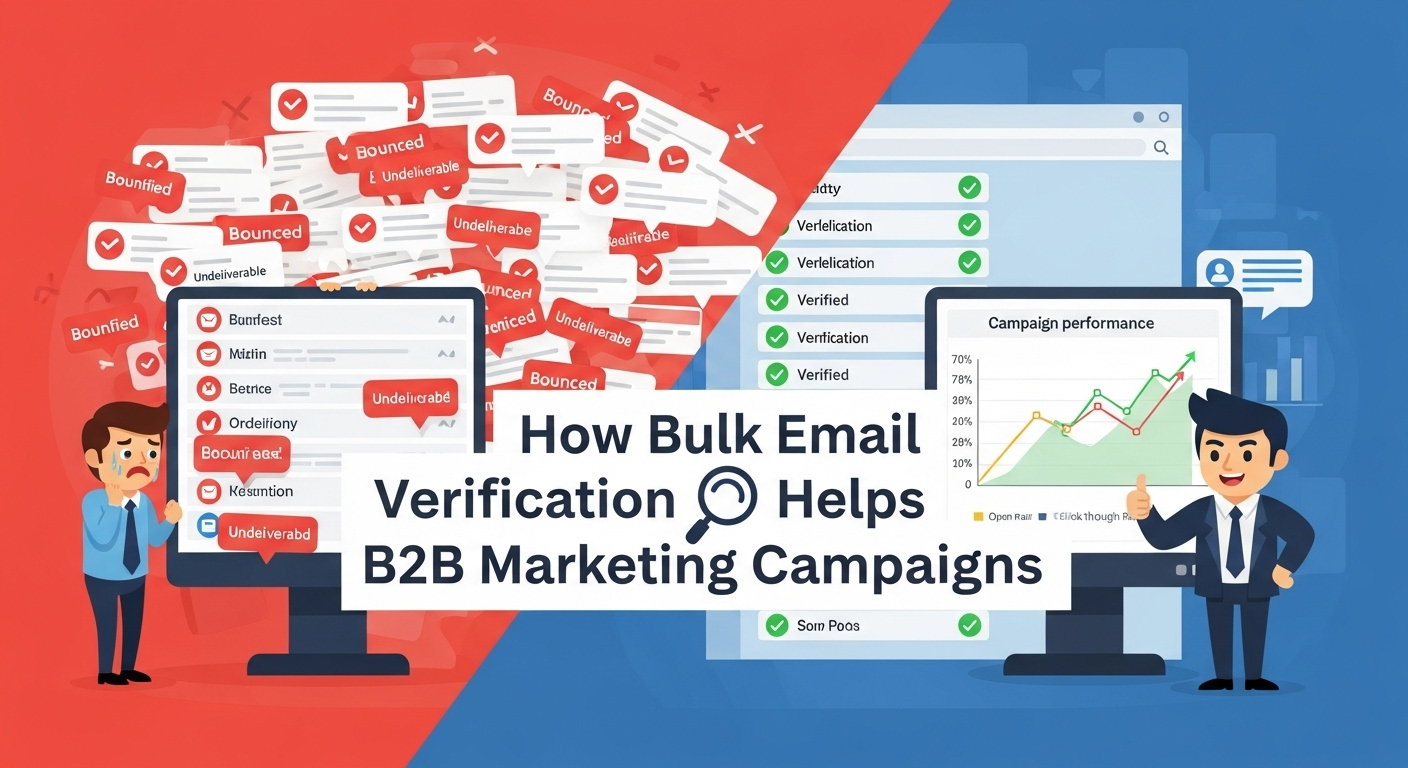
  • How Bulk Email Verification Helps B2B Marketing Campaigns

    How Bulk Email Verification Helps B2B Marketing Campaigns

    In the world of B2B marketing, email is a vital communication tool. But without the right approach, email campaigns can easily become ineffective, leading to spam complaints and blacklisting. One powerful way to protect your sender reputation and improve the performance of your B2B marketing campaigns is through bulk email verification. This process ensures that every email you send reaches the intended inbox and that your marketing efforts are not hindered by invalid or fake email addresses.

    Bulk email verification is essential for maintaining the health of your email list. When you regularly clean your email list, you drastically reduce the chances of encountering hard bounces, spam traps, or blacklisting issues. By ensuring that your email database is accurate, up-to-date, and free from invalid addresses, you not only protect your sender reputation but also enhance email deliverability, engagement, and conversion rates. In this article, we’ll explore how email verification can safeguard your campaigns and keep your email marketing efforts running smoothly.

    Outline:

    1. The Impact of Invalid Emails on B2B Marketing Campaigns (200 words)Invalid email addresses on your mailing list can seriously affect the success of your B2B campaigns. These invalid emails include hard bounces, fake addresses, or addresses that are no longer in use. When you send emails to these addresses, they bounce back, lowering your email deliverability rate. This not only wastes your resources but can also harm your sender reputation, leading to a higher chance of being marked as spam. Additionally, invalid emails can increase the risk of spam traps, which further damage your credibility.The benefits of regularly verifying your email list are clear. Bulk email verification tools help identify invalid addresses in your list and eliminate them. This process ensures that you send emails to real, deliverable addresses, which directly improves your engagement rates and reduces bounces. By keeping your list clean, you can avoid the negative consequences of sending emails to invalid contacts.
    2. Why Bulk Email Verification is Key to Avoiding Spam Complaints (200 words)Spam complaints are one of the most damaging consequences of poor email list management. If your emails are sent to non-opted-in recipients or invalid addresses, they are more likely to be marked as spam, causing your sender reputation to plummet. Spam complaints can lead to blacklisting, meaning your future emails may not even reach inboxes, making all your marketing efforts fruitless.Bulk email verification ensures that your emails are only sent to legitimate, interested recipients. This reduces the likelihood of spam complaints because recipients who receive relevant, personalized content are far less likely to mark your emails as spam. By verifying your email list, you can significantly decrease complaints, improve engagement rates, and protect your email domain from being blacklisted. This results in higher open rates and better customer retention, essential aspects of a successful B2B email marketing strategy.
    3. How Email Verification Prevents Blacklisting and Protects Your Sender Reputation (200 words)Email blacklisting can wreak havoc on any B2B marketing campaign. When an email service provider (ESP) or an anti-spam organization blacklists your IP or domain, your emails are sent straight to the spam folder or even blocked completely. Blacklisting occurs when your emails consistently fail to meet deliverability standards, often due to invalid emails, spam traps, or poor engagement. Without a solid sender reputation, you’ll find it increasingly difficult to reach your audience.Email verification plays a critical role in preventing blacklisting. By using bulk verification services, you can cleanse your email list of invalid or risky contacts, ensuring you’re only sending messages to engaged and authentic recipients. The result is a better sender score, increased trust with ISPs, and improved deliverability rates. Protecting your sender reputation with regular email verification is crucial in maintaining your email marketing success and ensuring that your emails reach their intended audience.
    4. Email List Hygiene: The Key to Improved Deliverability and Engagement (200 words)Maintaining clean email lists is vital for ensuring that your emails are delivered and read by your target audience. Poor email list hygiene, such as sending emails to outdated, incomplete, or incorrect email addresses, leads to poor deliverability, high bounce rates, and low engagement. By investing in bulk email verification, you are improving your list hygiene, which ultimately leads to better results from your B2B campaigns.Clean email lists lead to more accurate email segmentation, meaning your campaigns can be tailored to your audience’s interests and behaviors. This increased personalization helps boost engagement, as recipients are more likely to open and respond to emails that are relevant to their needs. Regularly cleaning your list ensures that your emails are reaching the right people and maximizing your campaign’s effectiveness.
    5. Optimizing Marketing Automation with Clean Email Data (200 words)Marketing automation tools are designed to streamline your email campaigns, but their effectiveness is heavily dependent on the quality of your email list. If your data is inaccurate or outdated, automation will become inefficient, leading to wasted resources and missed opportunities. By integrating bulk email verification into your marketing automation strategy, you can ensure that your emails are sent to the right people at the right time.Clean email data allows for more effective segmentation, improved targeting, and better timing of your campaigns. It also helps to prevent your automation system from triggering emails to invalid or irrelevant recipients, which can negatively impact your metrics. Bulk email verification supports these systems by providing an accurate and up-to-date database, optimizing your automated email strategy for better results and greater ROI.

    Conclusion:

    Email verification is a game-changer for B2B marketing campaigns. By implementing bulk email verification, businesses can ensure that their email marketing efforts are not hindered by invalid contacts, high bounce rates, or spam complaints. For startups and small businesses, email verification provides an easy and effective way to protect your sender reputation, improve deliverability, and boost engagement rates.

    Startups and business owners looking to maximize their email marketing efforts should prioritize email verification as part of their overall strategy. A clean, verified email list is the cornerstone of a successful email campaign, leading to higher open rates, fewer spam complaints, and better ROI. By adopting bulk email verification services, you are making a sound investment that will pay off in the long run.

    Investing in a reliable email verification service is essential for businesses wanting to build trust with their audience, avoid blacklisting, and improve their overall marketing performance. Take control of your email deliverability and start seeing the benefits of a cleaner, more accurate email list today.

  • Why Email Verification Is Essential for Dropshipping Businesses

    Why Email Verification Is Essential for Dropshipping Businesses

    In the fast-paced world of dropshipping, your email marketing efforts can make or break your success. But when your emails are flagged as spam or, worse, your domain gets blacklisted, your entire business faces a serious setback. Email verification plays a critical role in ensuring that your marketing campaigns reach the right audience, avoid spam complaints, and prevent blacklisting issues. As a dropshipping business owner, you need to protect your brand’s reputation, which starts with verifying your email list to ensure maximum deliverability.

    Every email you send should contribute to building your customer base, not hurting it. Imagine spending hours crafting the perfect campaign, only to see it end up in spam folders or blocked by ISPs due to unverified or incorrect email addresses. Email verification not only saves you time and effort but also builds trust with your customers, keeping your reputation intact. In this article, we will explore how email verification helps dropshipping businesses avoid these costly problems and why it’s essential to implement a reliable service from the start.

    Article Outline

    1. The Role of Email Verification in Dropshipping Businesses Email verification is a cornerstone for any successful dropshipping business. As a dropshipping owner, your primary goal is to convert prospects into loyal customers through targeted email marketing. However, without proper verification, you may unknowingly send emails to incorrect or non-existent addresses, leading to higher bounce rates. High bounce rates can damage your sender reputation, leading to your email domain being blacklisted or flagged as spam. In this section, we will explain the significance of email verification in maintaining a clean and effective email list, ensuring that every email sent is delivered to a legitimate, engaged audience. By verifying your emails, you can improve deliverability and protect your business from spam complaints and blacklisting, fostering better relationships with your customers.
    2. How Spam Complaints and Blacklisting Affect Dropshipping Businesses Spam complaints and blacklisting can be devastating for a dropshipping business. If your emails are marked as spam, ISPs (Internet Service Providers) will flag your domain, causing future emails to be blocked or sent directly to spam folders. This reduces the chance of your campaigns reaching the inbox, affecting sales and diminishing customer engagement. Worse, if your domain gets blacklisted, it can take weeks to regain your reputation, costing you valuable time and money. We will discuss the repercussions of these issues and how email verification is a proactive measure to avoid them. Additionally, we will explore common practices that inadvertently lead to blacklisting, such as sending unsolicited emails or using outdated contact information. Understanding these risks will help you implement better email practices and safeguard your dropshipping business.
    3. How Email Verification Works: A Technical Breakdown At the core of preventing spam complaints and blacklisting is understanding how email verification works. In simple terms, email verification ensures that the email addresses on your list are valid, active, and capable of receiving emails. This section will delve into the technical aspects of email verification services, explaining how they cross-check email addresses against databases of invalid, disposable, or inactive addresses. These services not only confirm the authenticity of an email but also assess whether an address poses a risk to your sender reputation. We will explore the verification process, including how it filters out invalid domains, role-based addresses (e.g., admin@domain.com), and temporary email services, all of which could harm your email deliverability and increase your chances of blacklisting.
    4. The Financial Impact of Poor Email List Hygiene Many dropshipping businesses overlook the financial implications of poor email list management. While it may seem like a small detail, using unverified email lists can result in substantial costs over time. High bounce rates lead to poor deliverability, which translates into fewer conversions and a tarnished brand reputation. This section will highlight the long-term financial consequences of neglecting email verification, including potential lost revenue from undelivered emails, additional spending on spam complaints, and the risk of penalties from ISPs. We will also provide a breakdown of the potential savings that businesses can achieve by using email verification services to clean and maintain their lists regularly.
    5. Choosing the Right Email Verification Service for Dropshipping Selecting a reliable email verification service is crucial to ensuring the success of your email marketing efforts. Not all email verification services are created equal, so dropshipping businesses must evaluate the features, reliability, and cost-effectiveness of each provider. This section will offer tips on choosing the best service, including looking for features such as real-time verification, an easy-to-use interface, and integration with popular email marketing platforms. We will also discuss how to determine the service that fits your business size and marketing needs. By partnering with the right provider, you can streamline your email campaigns, ensure high deliverability rates, and maintain a strong brand image.
    6. Best Practices for Email Marketing in Dropshipping Beyond verification, there are several best practices that dropshipping business owners can follow to enhance their email marketing success. This section will cover strategies such as segmenting your email list, personalizing content, optimizing for mobile, and ensuring your emails comply with anti-spam laws like GDPR. These practices not only improve customer engagement but also contribute to your overall email reputation. By combining effective email verification with these strategies, you can significantly increase the chances of your emails landing in inboxes and, more importantly, driving sales.

    Conclusion and Recommendations

    As a dropshipping business owner, email verification should be an integral part of your email marketing strategy. By preventing spam complaints and avoiding blacklisting, you ensure that your marketing efforts reach your customers and not the spam folder. We recommend investing in a reliable email verification service to keep your email list clean, improve deliverability, and maintain your business reputation. For startups, focusing on high-quality, validated email addresses from the start will save time and money down the line. Additionally, always stay updated with the latest email marketing trends and best practices to stay competitive and engaged with your audience. Start small, verify your emails, and scale up confidently – email verification is an investment in your long-term business success.